


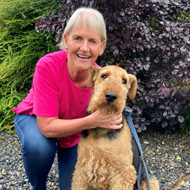
Rural affairs minister pays tribute to Professor Christianne Glossop.
The Chief Veterinary Officer (CVO) for Wales, Professor Christianne Glossop, is standing down from the role after 17 years.
Professor Glossop was appointed Wales' first CVO following the devolution of animal health and welfare powers in 2005. She previously worked in the State Veterinary Service, now known as the APHA, dealing with the Foot and Mouth Disease outbreak of 2001 and bovine TB.
Rural affairs minister Lesley Griffiths paid tribute to Professor Glossop for her "immense" contribution to animal health and welfare in Wales, adding:
“During her time as CVO she has dealt with a number of difficult animal disease outbreaks such as avian flu, the impact on Wales of the 2007 foot and mouth outbreak in England, as well as tirelessly working with her team on the TB Eradication Programme.
“In Wales, we now have an Animal Health and Welfare Framework and key Programme for Government commitments on animal welfare set out in our five-year plan. The new Sustainable Farming Scheme will include modules focussing on animal health planning and biosecurity, aligning with the ambitions set out in Framework. And we now also have a school of veterinary science at Aberystwyth University, the first in Wales, which Christianne is closely involved with.”
She added: “There is so much for Christianne to be proud of during her time as CVO, I will miss her knowledge, advice and support and wish her the very best in her future endeavours.”
CVO Christianne Glossop said: “It has been a huge privilege to be the first Chief Veterinary Officer for Wales – it has been my dream job. With the devolution of animal health and welfare powers, it was a once-in-a-generation chance to design the approach here in Wales, and I will always be grateful to have been part of that.
“We have faced many challenges, including the 2007 foot and mouth disease outbreak in England, closely followed by the first case of Bluetongue into GB, and the continuing threat of avian flu, but I have been very fortunate to have an excellent team of vets and officials working alongside me throughout.”
Professor Glossop continued: “When I started in the post, there was no hub of veterinary education and research in Wales, and now we have the school of veterinary science in Aberystwyth, and so much more besides, which shows how far we’ve come in that time.
“I’m so very grateful for the opportunities I’ve had as CVO, and I look forward to the next chapter of my career as a vet.”
Image (C) Government of Wales.


 Companies marketing medicines for small pets exempt from authorisation must submit their annual return to the Veterinary Medicines Directorate (VMD) by 30 November 2026.



