


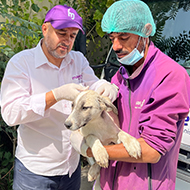
Mayhew Afghanistan reports zero rabies cases in the capital for 18 months.
Mayhew Afghanistan is celebrating the success of its mass rabies vaccination programme following 18 months without any recorded canine-mediated rabies deaths in Kabul.
The vet-led team has been working with Kabul Municipality dog catchers, trained in humane catching methods by UK charity Mayhew, across Kabul's sixteen districts. Once captured, the dogs are vaccinated and marked with a dash of non-toxic paint before being released.
Before moving on to the next location, it is necessary to vaccinate at least 70 per cent of the canine population there to break the chain of rabies virus transmission. To reach this threshold, post-vaccination surveys are conducted to count the dogs marked with the paint and compare the results to the prior dog population census.
In addition, the Mayhew Community Engagement team in Afghanistan are raising awareness of dog bite prevention to reduce the number of cases though a holistic approach. This work has seen the team reach more than 1,500 adults and 3,000 children in the past year.
Since the programme commenced in August 2017, almost 95,000 dogs have been vaccinated across Kabul. Plans are now underway for it to be rolled out to six remaining outlying districts of Kabul, which were previously inaccessible.
Caroline Yates, head of international projects and relations at Mayhew, said: “Since it first began five years ago, our rabies vaccination programme in Kabul, the first of its kind for Afghanistan and devised by Mayhew Afghanistan’s Country Director, Dr Abdul-Jalil Mohammadzai DVM, has raised the profile of the country’s struggle with rabies, this neglected yet endemic disease, with leading organisations involved in the fight against rabies.
She added: “The large number of vaccinated dogs and the fact there have been no canine-mediated rabies deaths in humans for 18 months, proves the campaign is working. As we approach World Rabies Day on 28 September, with this year’s theme of ‘One health, zero deaths’ in mind, Mayhew’s team in Afghanistan should feel very proud of their achievements.”
Image (C) Mayhew.


 Companies marketing medicines for small pets exempt from authorisation must submit their annual return to the Veterinary Medicines Directorate (VMD) by 30 November 2026.



