


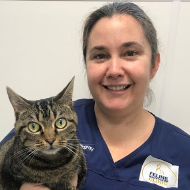
The annual event is taking place online for a third time.
Details of the upcoming ISFM (International Society of Feline Medicine) International Feline Congress have been revealed.
This year, and thanks to its success in previous years, the annual congress is being held virtually for a third time, allowing delegates access to more than 30 hours of online learning from the comfort of their homes.
Under the congress theme of 'Feline Fine: How to create harmony between and management of feline cases', a world-class lineup of speakers will deliver lectures, interactive sessions and in-depth masterclasses.
Among the feline experts include Professor Danièlle Gunn-Moore (feline medicine specialist), Dr Sarah Heath (specialist in veterinary behaviour), Dr Matt Gurney (specialist in veterinary anaesthesia) and Professor Clare Rusbridge (specialist in veterinary neurology).
The ISFM is the veterinary division of the charity International Cat Care. In 2021, its online conference attracted more than 3,000 veterinary professionals from over 90 countries.
The charity said that while in-person events have returned, including the ISFM Congress in Rhodes (30 June – 3 July), the importance of providing high-level feline education to veterinary professionals who may not otherwise have access remains.
Dr Nathalie Dowgray, head of ISFM said: “Whilst it was fabulous to be back in person in Rhodes this year, we cannot lose sight of the opportunity providing a virtual option gives the veterinary community. Giving the global veterinary community access to such top quality lectures on such an important topic is key to our mission of creating a Cat-Friendly World.”
The 2022 ISFM International Feline Conference is open to all veterinary professionals, including behaviourists, technicians and nurses interested in the relationship between feline emotions and behaviour, and other disciplines such as neurology, pain management, and internal medicine.
Following the live launch, there will be Q&A session with iCatCare’s Vicky Halls (Cat-Friendly homing manager), Linda Ryan (registered veterinary nurse and behaviourist) and Professor Danièlle Gunn-Moore.
For more details and to register your place, visit icatcare.org
Image (C) iCatCare.


 Companies marketing medicines for small pets exempt from authorisation must submit their annual return to the Veterinary Medicines Directorate (VMD) by 30 November 2026.



