


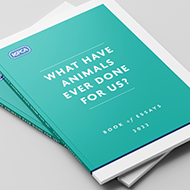
Global thinkers highlight importance of animals.
The RSPCA has launched a collection of essays, entitled 'What have animals ever done for us?', in a bid to transform animal welfare into a mainstream policy position.
Urging people to rethink the human-animal relationship, the collection is made up of essays from global thinkers on animal welfare and related topics, including Kate Darling, human-robot interaction researcher at the Massachusetts Institute of Technology (MIT), Philip Lymbery, global CEO of Compassion in World Farming and Peter James, author and animal advocate.
Dr Jane Goodall, world-renowned primatologist, has written the foreward – discussing how humans can reconnect with animals.
An incredibly diverse range of topics and opinions are explored, including the economic value of the natural world, animals in religion, what technology can teach humans about their feelings toward animals and the influence of animals on the legal system.
Director of advocacy and policy at the RSPCA, Emma Slawinski, said: “The RSPCA is proud to have brought together such established, experienced thinkers to discuss the role of animals in society; with these essays clearly highlighting the importance of the world urgently reevaluating its relationship to animals.
“Worryingly, humankind is fast approaching a turning point of our own making concerning our fortunes as a species.
“Inequality is growing, climate change and the destruction of the natural environment are devastating concerns; while the relentless march of technology increasingly impacts our daily lives.
“But rethinking the role of animals in our society could have many of the answers.”
The collection features essays such as 'Zoomorphising humanity', 'Battle for the planet: Why animal welfare holds the key', 'Following dogs following us' and 'When is an animal not an animal?'.
“From combating social loneliness, to regenerating natural resources through new approaches to farming, and even the interconnectivity between improving animal and human health, more just treatment of animals is not only the morally right thing to do - it will also benefit, and maybe even save, humankind,” said Emma.
“We know these are uncomfortable questions. But humans have developed the capacity to determine not merely our own fate but that of millions of other individual species and trillions of individual animals trying to live alongside us.
“We hope this essay collection will help kick start a conversation humans need to have - for our sake, and for animals."
'What have animals ever done for us?' is available to read for free on the RSPCA website.
Image (C) RSPCA


 Companies marketing medicines for small pets exempt from authorisation must submit their annual return to the Veterinary Medicines Directorate (VMD) by 30 November 2026.



