


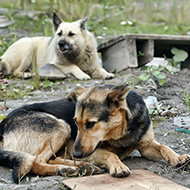
National and international welfare charities are supporting Ukraine's animal shelters.
Animal welfare charities and shelters both in Ukraine and around the world are working to support animals in need after Russia invaded Ukraine and began a Russo-Ukrainian War on 24 February 2022.
Vizslamentés UK Rescue Trust and sister charity Vizslamentés Magyarorszag Charity in Budapest, Hungary have launched a Ukrainian rescue appeal, working with a coalition of five animal charities known as the 'Associates of Advocates for the Protection of Animal Welfare'.
Vizslamentés is collecting financial donations to buy food, fuel and medical supplies to transport to the Ukrainian-Hungarian border to support animal rescue shelters in Ukraine which urgently need them to support their animals' wellbeing.
Similarly, Ukrainian animal welfare organisation UAnimals is collecting aid for refugees and for animal shelters left without food or medication. In its pinned post on Facebook, UAnimals said: “We urge the world to support Ukraine not in words, but in deed. We ask Ukrainians not to panic, take care of their own lives and not forget about the old, children and animals.”
Another Ukrainian nonprofit organization, Happy Paw Fund, is raising funds for animal shelters in need, and is also posting on social media about the needs of specific shelters, in order to get them local support. In a Facebook post, the charity said: “If there is a shelter near your neighborhood and animals in need, bring them any food if possible: feed, cereals, meat products, etc. They are in dire need of this.
“And most importantly, don't leave your pets unattended, currently in the shelter in the subways and for going abroad to Poland are freely allowed with animals.”
Ukraine's largest animal shelter, Sirus, is encouraging people to donate after the shelter ran out of fuel for its generators, and is left with no light or water, and minimal food supplies. In a social media post, volunteers and workers at the shelter said: “We are in the place. We are not going to run!
“We have to believe in our country and our defenders!”
Non-Ukrainian animal welfare organisations have been working at the country's borders to ensure that people fleeing Ukraine can safely pass through with their pets. One such organization is Casa lui Patrocle, a Romanian animal shelter and charity helping at the Ukrainian-Romanian border by translating, looking for solutions and providing information about what to do with pets.
PETA Germany is working at the Ukrainian-Polish border to provide care and supplies to pets crossing the border with their owners.


 Companies marketing medicines for small pets exempt from authorisation must submit their annual return to the Veterinary Medicines Directorate (VMD) by 30 November 2026.



