


OrthoPets release anatomically shaped casts
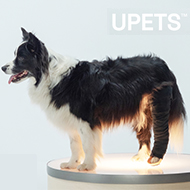
"Its stress free for both the vet and the pet, and brings veterinary casting to the modern day" - OrthoPets founder Martin Kaufmann.
Veterinary orthotics and prosthetics company OrthoPets has launched a range of anatomically shaped casts for pets, in order to reduce pressure sores.
The casts cover a range of casting treatments, from full leg casts to paw or toe injuries, and are made from biodegradable, breathable, and heat mouldable woodcast material.
In a press release, OrthoPets referenced a study which discovered that over 60 per cent of cast-treated pets gain additional injuries from the cast, affirming the need its anatomically shaped bi-valve splints, which were created using 30,000 3D scans of animal limbs.
The casts are made from the woodcast material used in human casts and instead of splints, and bandages, padding and tape, they use a soft unitex fabric, which passes moisture and dries fast.
Engineered for easy destabilisation by removing parts of the splint, the cast can be used across the entire treatment period, while the anatomical fit prevents sores and restore the normal limb position and movement.
Dassiet Chief Veterinary Surgeon Jouni Niemi said of the new casts: "Sores, pain and stiffness are always on the horizon with casting. But if we take the cast off too early, the leg can be injured again because of lack of proper support.
“UPETS tackles these problems all at once. I find it easy to apply the pre-shaped casts even for very small or large dogs and make adjustments if needed.
“I can watch my patients walk off the clinic normally with their cast, knowing they can wear it safely until fully healed. We see significant and immediate improvement in patients compared to the common cast”
OrthoPets founder Martin Kaufmann commented on the necessity of the product: “The common cast is very problematic, but we've lacked better alternatives.
“Now, with the Dassiet supermaterials and OrthoPets’ vast experience in veterinary biomechanics we have re-engineered the common cast. UPETS TLC is anatomical and safe. It’s stress-free for both the vet and the pet.
“It brings veterinary casting to the modern day and offers a better standard care option for all vets and orthopaedic surgeons out there.”


 Companies marketing medicines for small pets exempt from authorisation must submit their annual return to the Veterinary Medicines Directorate (VMD) by 30 November 2026.



