


Most dog owners unprepared for pets if worst should happen
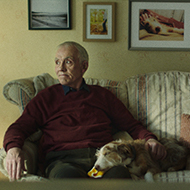
A still from the TV advert featuring actor Jonathan Pryce.
More than half of UK dog owners (58 per cent) have not made any provisions or thought about who would look after their pet if they became seriously ill or passed away, according to new research.
Dogs Trust's survey of 1,126 dog owners also found that 58 per cent think a friend or family member would take over ownership of their dog should the worst happen, but have not yet discussed it with them.
The figures come as the charity launches a new TV advert to showcase its Canine Care Card, a free service promising owners that their dog will be cared for by Dogs Trust should they become seriously unwell or die.
The advert (see below) features the voice of dog-loving actor Jonathan Pryce, who speaks about the close bond between crossbreed Wilf, and his owner, Tom - as well as Wilf’s penchant for stealing Tom’s underwear.
Owen Sharp, Dogs Trust chief executive, said: “We want to normalise making plans for the care of your dog should the worst happen, so that dog owners can rest assured that their four-legged friend will be given the best possible care if they no longer can. We would urge dog owners to think about signing up to a free Canine Care Card, so that should the worst happen Dogs Trust can take your dog in and make sure they are looked after as you would at home.”
In light of its findings, Dogs Trust is also calling on dog owners to appoint a 'dog guardian' - a friend, family member, neighbour or vet who agrees to take care of the dog and hand it over to Dogs Trust in the interim.
The charity also recommends that owners update their Will to include their Canine Card Information and notify friends and family of their wishes to ensure the process is dealt with as smoothly as possible when the time comes.
Owen Sharp continued: “Recent world events have shown that we never know what is around the corner and that life can be unpredictable. As a nation of dog lovers, we know the little quirks that make our dogs unique and, I for one, enjoy having the peace of mind that if the time ever comes when I can’t be with my dog, Dogs Trust is the next best place for her to be and they will never put a healthy dog down.”


 Companies marketing medicines for small pets exempt from authorisation must submit their annual return to the Veterinary Medicines Directorate (VMD) by 30 November 2026.



