


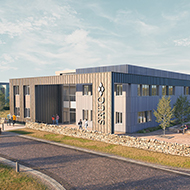
SRUC reveals plans to boost the economy and create jobs with the new centre.
A planning application has been submitted by Scotland's Rural College (SRUC) for its Rural and Veterinary Innovation Centre on the Highlands and Islands Enterprise (HIE) Inverness Campus.
The centre aims to create and develop jobs and the economy, by creating and supporting the development of both new and existing small to medium sized businesses using technology and expertise in big data.
Containing seven spaces and breakout areas for new bioscience-focused start-up businesses, the centre will also contain a necropsy suite for wildlife and laboratory spaces.
The current team at SRUC will be working closely with teaching colleagues, SAC Consulting, and SRUC Veterinary Services, and will apply their knowledge and recognised expertise in animal health, infectious disease control, and zoonotic disease research.
Previously known as the Rural Veterinary Hub, the centre will enhance SRUC's knowledge exchange with new lecture and workshop spaces, which can then also be used for community events and talks.
This new development will also contribute the veterinary school which SRUC announced it was creating last month, and aims to help grow Inverness's international reputation in bioscience. The centre will collaborate with regional organisations to examine links with human health, and the collaborative nature of Inverness Campus makes it an ideal location for SRUC's expansion.
Awarded £4.1 million by the European Regional Development Fund Scotland Programme 2014-2020, the total estimated budget of the project is around £9 million. The funding is also being supported by an additional £4.2 million financial transactional loan from the Scottish Funding Council.
Principal and chief executive of SRUC, Wayne Powell, commented: “By being based on the Inverness Campus, the Rural and Veterinary Innovation Centre will be part of one of the most exciting biotech hubs in Europe.
“It’s never been clearer that human health and animal health are part of the same system. By bringing researchers and commercial innovators together within the same space, we have a wonderful opportunity to develop new products and technology that will help prevent and deal with a future pandemic.
“We have also taken the opportunity to create new spaces for knowledge exchange and continued professional development for local business. By providing postgraduate education, we will create opportunities for students to engage with business. This will help foster the next generation of biotech entrepreneurs within the Highlands and Islands.”


 Companies marketing medicines for small pets exempt from authorisation must submit their annual return to the Veterinary Medicines Directorate (VMD) by 30 November 2026.



