


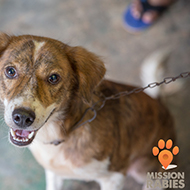
“We’ve now delivered 540,593 vaccinations against rabies in dogs” - Luke Gamble, CEO of Mission Rabies.
UK veterinary charity Mission Rabies is celebrating after Goa became the first Indian state to declare itself free of rabies.
Mission Rabies has been working with authorities in Goa since 2013 to vaccinate thousands of dogs, educate at-risk groups, and set up critical surveillance to prevent the further spread of the disease. The measures have led to low incidences of rabies across the state, and Goa being declared a Rabies Controlled Area.
It means that Goa’s government has control of the rabies virus, in both dogs and humans, and now has the authority to enforce dog vaccination and reporting of suspect rabies cases.
Dr Luke Gamble, CEO and Founder of Mission Rabies, told Charity Today: “We’ve now delivered 540,593 vaccinations against rabies in dogs and educated nearly one million people in dog bite prevention across Goa, as well as set up 24-hour rabies surveillance, involving an emergency hotline, rapid response team, and a support team for dog bite victims.
“All of this led to Goa becoming the first state in India to stop all human deaths from rabies in 2018. An incredible achievement we’ve been able to support thanks to the leadership and strategic direction of the Government. It is fantastic that we’ve now hit the next milestone in terms of controlling the disease in animal populations.”
In a bid to prevent rabies from re-emerging in Goa, authorities will now prevent unvaccinated animals from entering the state via ship, road, air or train. Pet owners within Goa will also be asked for their animal’s vaccination status, while affordable dog vaccines will be available to all pet owners.
Dr Marwin Lopes, deputy director and Nodal Officer for Rabies Control from the Government of Goa, added: “Now, after years of work, we are able to say that Goa is the first Rabies Controlled Area, and we hope other states will follow our example and work to achieve this too.”
A third of all human cases of rabies are thought to occur in India, where Mission Rabies launched in 2013. The charity also runs projects in Malawi, Uganda, Tanzania and Sri Lanka.
Image (C) Mission Rabies.


 Companies marketing medicines for small pets exempt from authorisation must submit their annual return to the Veterinary Medicines Directorate (VMD) by 30 November 2026.



