


British and French hen welfare affiliation announced
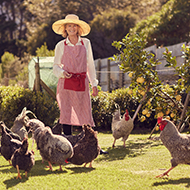
CLaP has rehomed over 5,000 laying hens
The British Hen Welfare Trust (BHWT), a UK charity, has announced its affiliation with Champs Libres aux Poules (ClaP), a newly-formed French animal welfare charity.
The two charities have launched their affiliation in order to further ClaP's mission to improve the welfare of hens in the commercial egg laying sector and to find pet homes for those hens that would otherwise have gone to slaughter in France.
Jane Howorth MBE started the BHWT in 2005, after she watched a Panorama documentary on factory farming. Howorth considered commercial laying hens to be the most undervalued animals in the food chain, and took up the goal of educating consumers about farming systems, whilst also working alongside the British egg industry to rehome commercial laying hens as pets and prevent their slaughter.
Howorth's work helped to bring about an end to battery cage farming in the UK in 2012, and she was subsequently awarded an MBE for her efforts. She has now helped to set up ClaP, to roll out a similar hen welfare programme in France, which is the EU's largest egg provider at current.
As of right now, France still allows old-style battery farms to operate flocks of less than 350 birds. However, with French public opinion becoming more concerned about animal welfare, many large multi-national supermarket chains have state that they will stop selling eggs from caged birds, and the three largest catering companies in France, Sodexo, Compass, and Elior, have pledged to stop using them by 2025.
Heidi Carneau, president of Champs Libres aux Poules, was inspired to begin ClaP when she learned of Howorth's work and adopted hens from the BHWT whilst living in the British countryside in 2015. When she moved to France in 2019, Carneau decided to set up ClaP to improve the welfare of laying hens in France.
Speaking about how ClaP was formed, Carneau said: “After we moved to France, I located a caged farm just 2 miles away; when I was given the opportunity to take some hens, I reached out to Jane for advice. Jane and I then explored the idea of working together and the charity was born.”
Serious planning for ClaP began in early 2020, and by autumn the charity was established. ClaP's governing board is made up of a bureau and two members of the BHWT, Jane Howorth MBE and Alasdair Cameron.
Howorth commented on the partnership: “I’ve known Heidi for several years so when the opportunity arose to work together in France with a similar objective and positive ethos, it was a question of when not if it happened. This new affiliate charity is a very exciting opportunity for all of us concerned with hen welfare.”
ClaP has begun their work on hen welfare in France, working with local farmers in the Gers region, and has already begun rehoming laying hens as pets, with over 5,000 hens already enjoying life as a pet.
Carneau said: “My ultimate is improving commercial hen welfare and rehoming as many hens as we can saving them from slaughter. Our charity motto is “Adoption, Education, Evolution.”
Find out more about ClaP at champslibresauxpoules.com/


 Companies marketing medicines for small pets exempt from authorisation must submit their annual return to the Veterinary Medicines Directorate (VMD) by 30 November 2026.



