


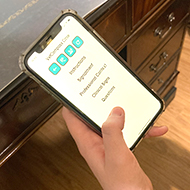
App uses clinical data sourced from more than 22,000 dogs
The RVC has launched an interactive app offering veterinary students a mixed-reality learning experience from their mobile phone.
The VetCompass Virtual Clinic forms part of RVC’s response to the disruption of in-person placements and work experience as a result of COVID-19.
Free to download on both iOS and Android, the app aims to supplement some of the gaps caused by restricted access to clinics during the pandemic.
Dr Dan O’Neill, senior lecturer in Companion Animal Epidemiology at the RVC and developer of the app, said: “This app supports modern learning theory by providing diverse and realistic clinical scenarios that students can work up alone or in groups. The app provides the questions but leaves the students to generate their own solutions to these clinical conundrums, and therefore optimising the learning experience.”
Building on real-world experiences, the app works by replicating typical caseloads and first-opinion practice scenarios in a readily accessible virtual world. Students can use the structured clinical skills approaches in the app to develop their clinical reasoning and case management skills using information pulled from anonymised and randomised data on more than 20,000 dogs.
Users can adapt, filter and select the way cases are presented to suit their needs and preferences. The app also provides enhanced accessibility options, including dyslexia-friendly colour schemes and both audio and written display.
As well as benefiting students in their clinical years, it is also hoped that the app will help undergraduates in their preclinical years explore the world of first-opinion veterinary care.
Dr Neerja Muncaster, a fellow at Surrey Vet School and co-developer of the app, said: “The global pandemic has accelerated our use of technology and in doing so has provided increased accessibility and inclusivity to users. This novel free app, using real-world data, is an authentic tool which encourages independent life-long learning.
"Investing in and supporting tomorrow’s clinicians improves not only their education but most importantly, the welfare of the animals who will be in their care.”


 Companies marketing medicines for small pets exempt from authorisation must submit their annual return to the Veterinary Medicines Directorate (VMD) by 30 November 2026.



