


Selective breeding in sheep could enhance resilience to climate change
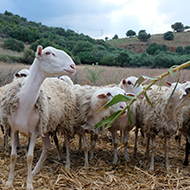
Some Chios sheep are more resilient than others to temperature fluctuations.
Identifying genes associated with variations in milk production could help farmers breed animals that are resilient to climate change, according to new research.
The study, published in Scientific Reports, looked into whether Mediterranean dairy sheep could be bred to retain productivity in a changing climate.
It reveals that some Chios sheep - whose milk is used to produce feta and other cheeses - are more resilient than others to temperature fluctuations throughout the seasons.
Using data from some 40,000 Chios ewes, researchers created a mathematical model of resilience to climate fluctuations based on milk productivity records, time of lambing and weather throughout the seasons.
They found that some animals responded better than others to temperature fluctuations in hot or cold conditions – with some hardly affected by the changes.
Resilience to hot or cold temperatures depended on the season in which the ewes had produced lambs, with sheep that had lambed in spring generally responding better to hot conditions.
Scientists say that future studies could focus on specific genes associated with resilience to temperature fluctuations in individual animals. The finding may also inform how to optimise breeding selection for this trait, alongside other desirable characteristics such as reproductive potential.
Professor Georgios Banos, from Scotland's Rural College (SRUC) and The Roslin Institute, commented: “Our findings have implications for selectively breeding animals with genes that enable resilience to changing climates and for farm management, such as the time of year when ewes are bred.”
The study involved scientists from the Aristotle University of Thessaloniki (AUTH), Greece, Scotland’s Rural College (SRUC) and The Roslin Institute.


 Veterinary practices are being urged to help owners safely dispose of any unused and expired pet medicines - not just antibiotics - during November's Animal Medicines Amnesty.



