


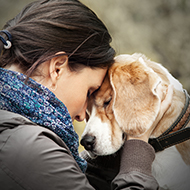
Service helps people and their dogs to flee domestic abuse.
The Dogs Trust Freedom Project, which offers foster care for dogs whose owners are fleeing domestic abuse, has officially launched in East Anglia.
The service is now available in Cambridgeshire, Norfolk and Suffolk, offering a vital lifeline to people who need to escape domestic abuse but are fearful for their pet's welfare when they do.
Sarah Rowe, Freedom Project co-ordinator for East Anglia, said: “As many refuges are unable to accept pets, survivors are understandably concerned about their dog’s safety when they need to escape.
“We appealed for people to apply to be Freedom foster carers in October; the response was amazing and we’ve already been able to help 20 dogs and their owners escape from domestic abuse.
“We now have 60 fantastic new volunteer foster carers in place across East Anglia and are ready to take in dogs at a moment’s notice if needed. Thanks to them, we can continue our life saving work.”
One of the people the project has already supported in East Anglia is Ella** who said: “When I had to use the Freedom Project, I was married with children. I was trying to get a refuge place, but I was worried about my dog, Socks, as I couldn’t leave him behind. Women’s Aid told me about the Freedom Project and said that they may be able to help us.
“Although I was upset to see Socks go into foster care, I saw him jump into the van and there was a new toy in there waiting for him. It was lovely seeing the updates of how he was doing and receiving the photos of him would brighten any bad day.
“When we were reunited it was amazing to have our dog home again. Socks came back so happy and had been really well looked after, they provided everything I needed and made the whole thing so much easier. It is such a great project and is helping so many people.”
Since being established in 2004, Dogs Trust’s Freedom Project has helped almost 1,700 people fleeing domestic abuse, providing foster care for more than 1,800 dogs. The service now operates across Greater London and the Home Counties, East Anglia, Yorkshire, the North East, the North West and Scotland.


 Companies marketing medicines for small pets exempt from authorisation must submit their annual return to the Veterinary Medicines Directorate (VMD) by 30 November 2026.



