
Your data on MRCVSonline
The nature of the services provided by Vision Media means that we might obtain certain information about you.
Please read our Data Protection and Privacy Policy for details.

In addition, (with your consent) some parts of our website may store a 'cookie' in your browser for the purposes of
functionality or performance monitoring.
Click here to manage your settings.
If you would like to forward this story on to a friend, simply fill in the form below and click send.

Your friend's email:
Your email:
Your name:
 
 
Send Cancel

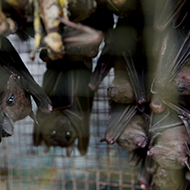
Born Free video highlights how humans are to blame for COVID-19
The video states that as many as 1.7 million unidentified viruses exist in animals which could potentially infect humans.

Charity calls for closure of wildlife markets worldwide 

Wildlife charity Born Free has released a video emphasising the importance of changing the ways in which humans treat wildlife in order to prevent pandemics from occurring in the future.

The video, narrated by founder patron Joanna Lumley OBE, says: “To deal with the very immediate threat of another global catastrophe, we have to focus on ending the destruction and conversion of natural habitats and the devastating impact of the wildlife trade.

“The vast majority of these viruses originated in wild animals before infecting us. Destroying and exploiting nature puts us in closer contact with wildlife than ever before.”

Born Free has compiled an online resource with information on how to take action and improve protections for wildlife here.

To view the video, please click here.

Image (c) Jan Schmidt-Burbach.

Become a member or log in to add this story to your CPD history

Submissions open for BSAVA Clinical Research Abstracts 2026

News Story 1
 The BSAVA has opened submissions for the BSAVA Clinical Research Abstracts 2026.

It is an opportunity for applicants to present new research on any veterinary subject, such as the preliminary results of a study, discussion of a new technique or a description of an interesting case.

They must be based on high-quality clinical research conducted in industry, practice or academia, and summarised in 250 words.

Applications are welcome from vets, vet nurses, practice managers, and students.

Submissions are open until 6 March 2026. 

Click here for more...
News Shorts
Survey seeks ruminant sector views on antimicrobial stewardship

A new survey is seeking views of people working in the UK ruminant sector on how to tackle the challenge of demonstrating responsible antibiotic stewardship.

Forming part of a wider, collaborative initiative, the results will help identify the types of data available so that challenges with data collection can be better understood and addressed.

Anyone working in the UK farming sector, including vets and farmers,is encouraged to complete the survey, which is available at app.onlinesurveys.jisc.ac.uk

