


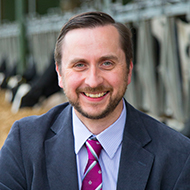
Dr Philip Robinson to lead the new department of Veterinary Health and Animal Sciences.
Harper Adams University has named Dr Philip Robinson as head of its new Department of Veterinary Health and Animal Sciences.
Dr Robinson is an academic veterinary surgeon, teaching and researching farm animal health and welfare and veterinary public health.
After qualifying from the University of Glasgow, he worked in private veterinary practice in Northern Ireland and Scotland before spending more than a decade as a field veterinary officer and epidemiologist with Northern Ireland's Department of Agriculture, Environment and Rural Affairs (DAERA).
Soon after joining Harper Adams University in 2015, Dr Robinson became the first-ever RCVS Recognised Specialist in State Veterinary Medicine, before going on to promotion as principal lecturer in farm animal health and welfare.
He took a short break from Harper Adams to work as a senior lecturer in veterinary public health at the University of Glasgow, before returning in September as it launched the UK’s ninth vet school, in partnership with Keele University.
In this new role, Dr Robinson will work alongside the vet school leadership team to ensure veterinary nursing, veterinary physiotherapy and veterinary medicine students train together and develop the professional networks they will need in practice.
Dr Robinson said: “I am honoured to be leading the new Department of Veterinary Health and Animal Sciences at an exciting time in the development of Harper Adams University. The opening of the new Veterinary Education Centre as part of the Harper & Keele Veterinary School offers fantastic new facilities and equipment for training veterinary nursing and veterinary physiotherapy students from my department.
“Additionally, there are excellent opportunities for inter-professional education and research collaboration between all of the different disciplines in animal health and welfare represented at the university.”
Image (C) Harper Adams University.


 Companies marketing medicines for small pets exempt from authorisation must submit their annual return to the Veterinary Medicines Directorate (VMD) by 30 November 2026.



