


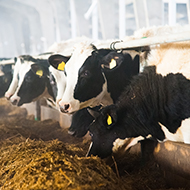
Study aims to find out the prevalence of the condition in Scotland.
Vets at Scotland's Rural College (SRUC) are calling on farmers to get involved with a project investigating the prevalence of Mycoplasma Bovis (M. Bovis) in dairy cows.
M. Bovis is an infectious disease that causes pneumonia and middle ear disease in calves, and mastitis and lameness in adult cattle. Infections are typically longstanding and hard to treat as the most commonly used antibiotics are ineffective against the bacteria.
The disease spreads via direct contact, the environment, milk, colostrum and semen. Operating a closed-herd policy significantly reduces the likelihood of introducing M. Bovis to the herd.
In the study, participating farmers will be required to submit bulk tank milk samples over a year to be tested for the presence of M. Bovis and antibodies. They will also be required to complete a short questionnaire on general herd management practices.
The original call for farmers to take part in the project went out in February, but the project was put on hold owing to the coronavirus pandemic. Farmers that have already signed up to take part will be contacted in the coming weeks.
Project lead Jessica Ireland-Hughes, from SRUC Veterinary Services, said: “We’ve been working behind the scenes to enable us to start the project once restrictions are lifted and it is safe to do so. The study will hugely benefit the industry as it will help us gain a better understanding of what farms are more or less at risk from M. Bovis and the reasons why.”
Dairy farmers in Scotland who are interested in the project should email mycoplasmabovis@sruc.ac.uk or text 07785 382 371.


 Companies marketing medicines for small pets exempt from authorisation must submit their annual return to the Veterinary Medicines Directorate (VMD) by 30 November 2026.



