
Your data on MRCVSonline
The nature of the services provided by Vision Media means that we might obtain certain information about you.
Please read our Data Protection and Privacy Policy for details.

In addition, (with your consent) some parts of our website may store a 'cookie' in your browser for the purposes of
functionality or performance monitoring.
Click here to manage your settings.
If you would like to forward this story on to a friend, simply fill in the form below and click send.

Your friend's email:
Your email:
Your name:
 
 
Send Cancel

RSPCA Cymru dealing with over 50 incidents a day during lockdown
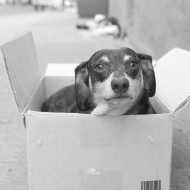
"Animal cruelty has not stopped for the coronavirus. There are still countless animals across the country in urgent need of help".
Rescuers have dealt with almost 1,650 incidents in Wales alone in the last month.
 
RSPCA Cymru is dealing with more than 50 incidents a day during the COVID-19 lockdown.

Figures released by the animal welfare charity show that animal rescue teams dealt with 1,641 incidents in the month following the nation entering lockdown.

The data has been released as part of an emergency appeal, launched to keep rescue teams on the road during the pandemic and continuing to reach animals in need.

Across England and Wales, RSPCA rescuers dealt with a total of 21,137 animal welfare incidents between 23 March and 23 April.

Among these rescues included two baby wild mice saved from behind a shed in Cardiff, a swan that became entangled in fishing wire at Pen-Y-Fan, and a cat in that got stuck up a tree in Cwmbran.

The RSPCA's animal centres at Newport and Bryn-Y-Maen are currently closed to the public but continue to provide care for their 170 animals. The RSPCA's veterinary team at Merthyr are also working to help sick and injured animals, and deal with emergencies.

 “Animal cruelty has not stopped for the coronavirus. There are still countless animals across the country in urgent need of help - and these new figures show, since the lockdown, our rescuers have been supporting animals in all parts of Wales,” said Martyn Hubbard, RSPCA Cymru superintendent.

“Our teams are still out and about rescuing animals in urgent need of care. Rescuers have dealt with almost 1,650 incidents in Wales alone in the last month - an average of more than 50 each and every day.”

Become a member or log in to add this story to your CPD history

Vets launch new podcast for pet owners

News Story 1
 Two independent vets have launched a podcast to help owners strengthen their bond with pets. Dr Maggie Roberts and Dr Vanessa Howie, who have worked in both veterinary practice and major charities, are keen to use their experience to enable people to give pets a better life.

The venture, called Vets Talking Pets, provides advice and information on a range of topics, including how to select a suitable pet, where to obtain them and how to get the best out of your vet. Maggie and Vanessa will also discuss sensitive subjects, including end-of-life care, raw food diets and the cost of veterinary care.

The podcast can be found on all the usual podcast sites, including Podbean, Apple, Amazon Music and YouTube. 

Click here for more...
News Shorts
BEVA CPD course explores sino-nasal disease

The British Equine Veterinary Association (BEVA) will host a new CPD course exploring the diagnosis of sino-nasal disease.

Led by Safia Barakzai, Henry Tremaine, Justine Kay-Smyth and Neil Townsend, the course aims to support experienced equine vets dealing with nasal discharge cases.

The course will be presented through a series of practical sessions, accompanied by case-based learning. Attendees will be guided to improve their oral examination technique and radiographic approach, as well as learning how to make good use of endoscopy and oroscopy.

BEVA says that learners can combined these skills to perform a 'logical, efficient investigation', with better clinical decision-making and fewer unnecessary steps.

The course will take place on Tuesday, 21 July at the University of Surrey. For more information or to book, visit the BEVA website.

