


Guide Dogs launches COVID-19 information line
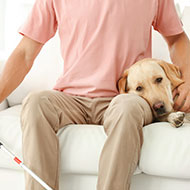
"Something I have taken for granted all my life is being able to ask someone if I can take their arm if I need to be guided."
A national information line to support people living with sight loss during the COVID-19 pandemic is to be launched by Guide Dogs.
The COVID-19 Sight Loss Information Line comes in response to an influx of concerns raised by people with sight loss, their families and friends. Among the key concerns include social distancing with sight loss, access to food, increased isolation and guide dog health.
Guide dog owner Clive Wood knows first-hand that in the current situation, feelings of isolation can only increase.
“Something I have taken for granted all my life is being able to ask someone if I can take their arm if I need to be guided - not being able to do this makes simple things like going to the supermarket really challenging,” he said.
“It is also extremely difficult to observe social distancing rules when you can’t see how close people are. My guide dog, Winnie, is fantastic and will guide me around people, but not necessarily two metres away. Last week on a walk, someone brushed past me, which made me feel anxious, but for guide dog owners, there is also the issue of ensuring our much-loved companions get enough enrichment and stimulation during lockdown.”
The new information line will be launched on Monday (20 April) by actress and Guide Dogs supporter Joanna Scanlon. It forms part of a series of #GuideDogsFamily initiatives set up by the charity to help people with sight loss during the pandemic.
Guide Dogs services director, Kirstie Bower, explains: “We’re moving swiftly to adapt our support for people with sight loss in these challenging times. As well as launching the information line, we’re urging people to check on friends, family and neighbours with sight loss by phone or video to offer practical advice and emotional support.
“We are also campaigning alongside other sight loss organisations for the government to include people with sight loss in the list of vulnerable groups with access to priority slots for online shopping and have also issued advice on keeping dogs stimulated and enriched during periods of isolation.”
The COVID-19 Sight Loss Information Line will be available on 0800 781 1444, with calls being taken Monday to Friday, 10 am to 4 pm. More information about the support line can be found on the Guide Dogs website.


 Companies marketing medicines for small pets exempt from authorisation must submit their annual return to the Veterinary Medicines Directorate (VMD) by 30 November 2026.



