
Your data on MRCVSonline
The nature of the services provided by Vision Media means that we might obtain certain information about you.
Please read our Data Protection and Privacy Policy for details.

In addition, (with your consent) some parts of our website may store a 'cookie' in your browser for the purposes of
functionality or performance monitoring.
Click here to manage your settings.
If you would like to forward this story on to a friend, simply fill in the form below and click send.

Your friend's email:
Your email:
Your name:
 
 
Send Cancel

Wrexham third council to say 'pets aren't prizes'
Having pets as prizes encourages owners to take on pets spontaneously.

Discussions with RSPCA advance initiative to end ‘outdated practice’

Wrexham Council has become the third council in Wales to ban the giving of pets as prizes on its land. Action follows discussions with RSPCA Cymru and is another step in the organisation’s bid to instate a country-wide ban on the practice. Wrexham Council joins Caerphilly and Newport in enacting the policy.

The ban means that Wrexham council will not grant licences to anyone planning on giving pets as prizes, including in the town centre and at local fairs. This practice has been commonplace in many areas for decades and can be detrimental to the welfare of the animals being given away.

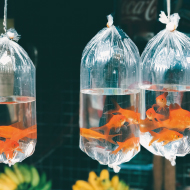
A total of 24 incidents in Wales were reported to the RSPCA’s emergency line between 2014 and 2018. 60 per cent of these calls were related to goldfish.

Lewis Clark, RSPCA public affairs adviser, said: “The RSPCA is absolutely delighted that Wrexham Council has become the third local authority in Wales to ban the giving of pets as prizes.

“Sadly, we know many pets won as prizes will die before getting back to their new homes, or shortly after. Ultimately, having animals as prizes like this actively encourages owners to take on pets in a spontaneous, ill-planned manner. This is an outdated practice that we need to see the back of in Wales.”

Amanda Davies, town centre, markets and events manager from Wrexham Council, adds: “We are more than happy to be part of this initiative by ensuring that no one who puts on any event on council owned land in the town centre gives away pets as prizes. 


“We’ve done this informally for some time and are very pleased that this is now a formal arrangement and part of our conditions of use. The practice is outdated and it’s not what visitors to the town centre want to see happening.”

Become a member or log in to add this story to your CPD history

Vets launch new podcast for pet owners

News Story 1
 Two independent vets have launched a podcast to help owners strengthen their bond with pets. Dr Maggie Roberts and Dr Vanessa Howie, who have worked in both veterinary practice and major charities, are keen to use their experience to enable people to give pets a better life.

The venture, called Vets Talking Pets, provides advice and information on a range of topics, including how to select a suitable pet, where to obtain them and how to get the best out of your vet. Maggie and Vanessa will also discuss sensitive subjects, including end-of-life care, raw food diets and the cost of veterinary care.

The podcast can be found on all the usual podcast sites, including Podbean, Apple, Amazon Music and YouTube. 

Click here for more...
News Shorts
BSAVA publishes fifth Manual of Canine and Feline Neurology

The BSAVA has published the fifth edition of its BSAVA Manual of Canine and Feline Neurology.

The new edition has been reviewed and updated, including new developments in diagnostics, therapeutic approaches and clinical decision-making. It is structured to support clinicians through diagnosis, treatment and long-term management.

The guide features five new chapters covering acute myelopathies, chronic myelopathies, emergency protocols, neurotoxicology and neuro-oncology.

It also includes over 100 videos, including demonstrations of neurological examinations, clinical presentations and diagnostic procedures.

Nicola Lloyd, publishing manager, said: "Whether you're a general practitioner seeking practical guidance, or a specialist aiming to refine your expertise, this edition remains an indispensable reference for anyone involved in the care of neurologically compromised dogs and cats."

