


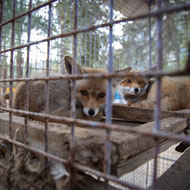
Vets to evacuate 40 animals late March
Forty animals from Gaza’s oldest and most notorious zoo are set to be evacuated at the end of March.
Rafah Zoo made headlines in January after four lion cubs froze to death due to harsh weather and poor keeping conditions. Weeks later, a lioness was brutally declawed with a set of garden shears.
Now veterinary charity FOUR PAWS are gearing up to rescue the animals after the Zoo’s owner agreed to hand them over. A petition calling for the closure of the zoo had received just shy of 150,000 signatures.
The animals - including five lions, a hyena and various monkeys - will be loaded into transport crates and moved around 300 kilometres to Jordan. Once there, the animals will be accommodated in sanctuaries, such as the wildlife rescue centre "Al Ma'wa for Nature and Wildlife.”
“We are happy to finally put an end to this horror,” said FOUR PAWS vet and head of mission Dr Amir Khalil. “For far too long, the animals of Rafah Zoo have had to live under unimaginably dreadful conditions. Evacuating more than 40 animals in just a few days will be a logistical, mental and physical feat – it is our biggest rescue mission to date.”
Rafah Zoo opened on the Egyptian border in 1999 and, from there, wild animals are repeatedly smuggled through underground tunnels to and from Gaza. Since the zoo opened, many of the animals have died in rocket attacks and war battles. Some of the animals are still stuffed and on display at Rafah Zoo.
The zoo in Rafah is well known to FOUR PAWS. In 2015 the owner of the zoo sold two lion cubs to a local citizen, who gave them to his grandchildren as a gift. Photos of the two lions in the middle of a refugee camp went around the globe.
Image (C) FOUR PAWS.


 Companies marketing medicines for small pets exempt from authorisation must submit their annual return to the Veterinary Medicines Directorate (VMD) by 30 November 2026.



