


Call for new independent body on bTB control
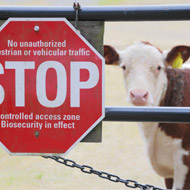
The report warns the livestock industry must take more responsibility for on-farm controls.
A review of the government’s 25-year Bovine TB Strategy has called for a new independent body on disease control.
The report warns the livestock industry must take more responsibility for on-farm controls, biosecurity and safe trading practices to prevent further spread of the disease.
It also states that more could be done to help farmers make purchasing decisions, reflecting the risks of cattle being infected.
The review was led by population biologist and Fellow of the Royal Society Sir Charles Godfrey. Commissioned by environment secretary Michael Gove, it aims to inform future strategies around the government’s goal of eradicating the disease by 2038.
Ministers are considering the report’s recommendations and are expected to publish a response in due course.
Commenting, Farming minister George Eustice said: “We welcome this review of the Government’s 25-year Bovine TB strategy and I extend my thanks to Sir Charles Godfray and his team for their hard work in producing the report.
“As a Government, we are committed to eradicating bTB and have always been clear that there is no single measure for tackling it. That’s why we have pursued a range of interventions, including cattle movement controls, vaccinations and controlled culling in certain areas.
“Sir Charles’ report is an important contribution that will inform next steps in the strategy to achieve officially TB free status for England by 2038.”
A new independent body on disease control would be helpful to take over disease control operations from APHA, Natural England and local authorities, the report says. It also notes that the poor take-up of on-farm biosecurity measures is ‘severely hampering’ disease control measures and calls on the livestock industry to take more ownership of the problem.
Sir Charles Godfrey said: “The Review Panel are acutely aware of the burden this disease places on the welfare and well-being of farmers and their families, and the distress many people feel about badger culling.
“There are no easy answers to reducing disease levels and what is required is new drive and a concerted and concentrated effort by all sectors involved.”


 Companies marketing medicines for small pets exempt from authorisation must submit their annual return to the Veterinary Medicines Directorate (VMD) by 30 November 2026.



