


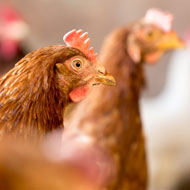
Scientists conduct welfare assessment of LAPS
A new regulation that makes it lawful to use Low Atmospheric Pressure Stunning (LAPS) for the pre-slaughter of broiler chickens has been introduced by the European Union.
The move follows an assessment led by the Universities of Glasgow and Edinburgh, which demonstrated that LAPS provides a high welfare alternative to current commercial approaches.
Using the LAPS method, poultry is irreversibly stunned by gradually reducing the atmospheric pressure and consequently the amount of oxygen available. The method is the first of its kind to be added to EU regulations.
“Our work on LAPS provided an extensive welfare assessment of this novel method, which was utilised to underpin policy change at EU level,” explained Dr Dorothy McKeegan from the University of Glasgow. “The approval of LAPS in Europe is a major development in broiler chicken welfare which paves the way for global uptake of this humane method of stunning.”
Dr Jessica Martin from the University of Edinburgh added that the stunning and slaughter of animals is key to livestock production and that methods used should always represent the highest welfare standards.
“Our extensive welfare assessment of LAPS and the resulting change in legislation allowing its use in broiler chickens in the EU demonstrates high impact science and its application to improve animal welfare,” she said.
The study represents the most extensive welfare assessment of a stunning system for poultry. Work is now underway to see if LAPS could improve welfare killing in other species.
The research was carried out in collaboration with Mississippi State University, University of Arkansas, University of Florida and Wageningen University and Research.


 Companies marketing medicines for small pets exempt from authorisation must submit their annual return to the Veterinary Medicines Directorate (VMD) by 30 November 2026.



