


Research to improve livestock welfare and economic production
More than £1million of funding has been awarded to The Pirbright Institute to tackle major viral diseases that threaten livestock populations in Asia.
The money, awarded by BBSRC-Newton fund, will fund research into two poultry and two pig diseases that have a detrimental impact both on animal welfare and the local economy.
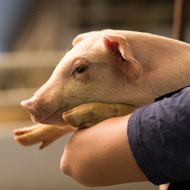
Led by Dr Elma Tchilian, the pig disease research will focus on viruses caused by porcine reproductive and respiratory syndrome (PRRS) and swine influenza A. Working with colleagues in Thailand, Dr Tchilian hopes to introduce a vaccine strategy that will benefit both animal welfare and the livelihoods of farmers.
The poultry study will be led by Dr Yongxiu Yao and Professor Munir Iqbal who will assess the diseases caused by avian leukosis virus and avian influenza viruses.
Dr Yongxiu Yao’s team will build on links with Chinese institutes through Newton Funded UK-China Centre of Excellence for Research on Avian Diseases (UK-China CERAD) to share expertise and develop strategies for controlling avian leukosis virus.
Professor Munir Iqbal will steer work to offer information about how avian influenza viruses that plague the poultry production systems of China are able to evade current vaccines and what increases the risk of human transmission.
The ultimate aim of the three projects is to improve livestock welfare and economic production, helping to ensure global food security.


 Companies marketing medicines for small pets exempt from authorisation must submit their annual return to the Veterinary Medicines Directorate (VMD) by 30 November 2026.



