


Gove outlines plans for farming post-Brexit
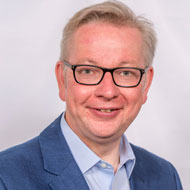
Mr Gove said he wants a new method of providing financial support to farmers, moving away from subsidies.
Defra secretary Michael Gove has shed light on future plans for the farming industry post-Brexit, in a speech at the Oxford Farming Conference.
Mr Gove said he wants to drive change in four specific areas: creating a “coherent” policy on food; giving farmers the time and tools to adapt to the future; implementing a new method for providing financial support to farmers; and developing a sustainable future for the countryside.
The secretary of state also proposed to invest more in technology, including super-fast broadband, reliable 5G coverage and sensor technology that can tell where, when and how livestock should be fed, housed and bred to maximise yield, health and welfare.
The UK will formally leave the EU in March 2019, but the government expects to agree a transition period of a further two years. Mr Gove’s comments come ahead of the government’s Command Paper, which is due to be published this spring.
Trade negotiations
As trade negotiations are about to get underway, Mr Gove said Defra “is preparing for every eventuality”. However, he added: “We are confident of building a new economic partnership with the EU that guarantees tariff-free access for agri-food goods across each other’s borders.”
Nonetheless, he said access to other markets outside the EU 27 “will be important to British agriculture’s further success”, including increasing exports to China.
Farmer payments
The Common Agricultural Policy (CAP), which pays land owners for the amount of agricultural land they have, was described as “unjust” and “inefficient”. Gove said he wants to move away from subsidies, to a new approach of public money for public goods.
The government has guaranteed that cash allocated for farming support will be protected up until the end of this parliament in 2022. Support for Countryside Stewardship agreements that were entered into before Brexit will continue. The 2019 BPS scheme will be paid on the same basis as currently.
Mr Gove said he then envisages guaranteeing BPS payments for a transition period of a number of years beyond implementation, depending on the results of a consultation. During these years Defra is proposing to first reduce the largest payments in England.
Defra also plans to provide new support for farmers who choose to manage their land in the most sustainable manner. In addition, the government will create a scheme for land owners or managers who wish to enhance the natural environment by, for example, planting woodland, providing new wildlife habitats and increasing biodiversity.
Inspections
Mr Gove said Defra should change its approach to inspections, which he believes are currently undertaken “too often, too ineffectively and in far too many cases for the wrong things”. He hopes to “look at how we can reduce the number of inspections overall, make them more genuinely risk-based and have them focus on those, limited, areas, where standards are not what they should be.”
The response from vets and farmers
In a statement after Mr Gove’s speech, BVA president John Fishwick said: “Delivering public goods should be at the heart of a new post Brexit agricultural policy, benefiting producers, consumers and wider society.
“Today Mr Gove committed to investing in the public goods of the natural environment, technology and skills, infrastructure, public access and rural resilience. Yet any post Brexit agricultural policy must also support animal health and welfare as public goods, since these are the very reasons that we have our global reputation for agricultural produce and high standards.”
However, Mr Fishwick commented: “In equipping the next generation of farmers with the latest tech and training, we shouldn’t underestimate the importance of continued side-by-side working between farmers and local vets in order to optimise animal health and welfare, productivity and competitiveness.
“Vets are integral to food production, from farm to fork, and so vets must also be an integral part of any policy development, review and implementation.”
The National Farmer’s Union (NFU) welcomed the speech as ‘impressive and comprehensive’. President Meurig Raymond said: “"I was pleased to hear the Secretary of State talking about the need to invest in technology, skills and rural resilience - all of which he says are public goods.
"Michael Gove also spoke about the importance of delivering benefits for the environment, something that farmers already advocate and perform highly on. Mr Gove was absolutely right to recognise the vital contribution that uplands farmers have in maintaining their iconic landscape.”


 Companies marketing medicines for small pets exempt from authorisation must submit their annual return to the Veterinary Medicines Directorate (VMD) by 30 November 2026.



