


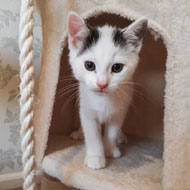
Four Yorkshire charities are teaming up to find a humane solution to a feral cat colony that is spiralling out of control in Dewsbury.
Cats Protection recently began a project to find and capture feral cats living on the Dewsbury Moor Estate. They found a staggering number of cats that had never been owned by humans, many of whom are now nursing kittens.
Barbara Brotherton, a foster carer for Yorkshire Cat Rescue, said: “This is one of the worst concentrations of homeless and feral cats I've heard of; something had to be done. All those kittens faced an uncertain future if they weren't put into care immediately.”
Cats born outside often struggle to adapt to life as household pets, so these animals are usually neutered and released. But Yorkshire Cat Care says their kittens have the potential to become happy family pets, after an intensive care and taming effort.
Barbara took in over 20 kittens from five different litters, and a few adult cats. Many were only days old and had to be hand-reared around the clock. Local animal charities PAWS and Independent Cat Rescue both agreed to find foster homes for a further 23 kittens and cats. In total, 44 kittens and three adult cats were placed in foster homes.
While three of the most unwell kittens died, Barbara’s remaining kittens are doing well.
She says: "It's amazing to think that these kittens were born outside and were facing a potentially short and stressful life without a family. Soon, because of everyone's effort, they will be put up for adoption. I can't wait for them to get all the love and attention they deserve, in their very own home.”
Yorkshire Cat Rescue is managing the effort of raising the kittens and covering vet bills.
Founder Sara Atkinson said: "This has been a real team effort; a success owed to a handful of dedicated foster carers, who are right now giving up all of their spare time and many nights' sleep to give these kittens a fighting chance.
“I am truly impressed and grateful. There are far too many feral and homeless cats in the UK, and many of them are not neutered which means the problem is spiralling out of control.”
While Sara says the charity supports initiatives to manage the situation, she believes local authorities “could do more to fund efforts aimed at tackling especially high numbers of feral and homeless cats in their streets.”
She also encouraged cat owners to play their part by making sure their pets are neutered to reduce the number of pregnancies and unwanted kittens.
Image courtesy of Cats Protection


 Companies marketing medicines for small pets exempt from authorisation must submit their annual return to the Veterinary Medicines Directorate (VMD) by 30 November 2026.



