


Competing parasites may cause more disease spread
Communication between parasites that cause sleeping sickness could affect the virulence and spread of this potentially fatal disease, according to new research.
The study, published in Nature Microbiology, reveals that when two types of sleeping sickness parasite infect an animal at the same time, messages between the parasites seem to help them compete with - or manipulate - each other. Scientists say this puts them in a position to cause more disease or spread to cause further infections.
The study, led by the University of Edinburgh, was funded by the Wellcome Trust.
“This discovery opens up possibilities for understanding real infections featuring mixtures of competing parasites and the effects on disease virulence and spread,” commented Professor Keith Matthews of the School of Biological Sciences. “Also, if we knew more about the signals being shared between the parasites, this might allow us to manipulate to these signals to trigger early growth arrest.”
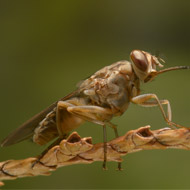
Spread by the tsetse fly, sleeping sickness presents a major threat to human health in areas of sub-Saharan Africa and leads to loss of livestock. In the study, researchers from the University of Edinburgh analysed two species of Trypanosoma parasites. Both of the parasites can co-infect animals at once, and one of the species can transmit disease to people.
Researchers say that communication between the species, most likely by the production of biochemical signals, could assist in their survival by helping to control their numbers. It may also assist in the spread of disease without killing the infected animal on which they depend, they add.
The researchers noted how one species of parasite, Trypanosome congolense, can not only inhibit its own growth, but can also grapple with another species, T. brucei - which can cause disease in humans - by limiting its growth, and aiding its spread by flies.
The discovery suggests that human infection caused by a single parasite could be more severe if the parasite has previously been in competition with another species. Scientists say that targeting parasite communication could lead to a new method to limit the transmission of sleeping sickness in cattle, for which there are no vaccines, and may have consequences for human health.
Image (C) International Atomic Energy Agency


 Companies marketing medicines for small pets exempt from authorisation must submit their annual return to the Veterinary Medicines Directorate (VMD) by 30 November 2026.



