


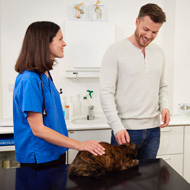
BBC quiz show host, Rick Edwards pledges support to Viral Cats campaign
In a recent survey of 2,000 UK cat owners, commissioned by Merial Animal Health, it was revealed that nearly 50 per cent of UK cat owners don’t vaccinate their cats annually.
Rick Edwards, host of the BBC’s daytime quiz show, !mpossible, and a self-confessed cat lover, has pledged his support for the Viral Cats campaign; which aims to raise awareness of the importance of vaccinating cats against preventable diseases, such as feline infectious enteritis (feline panleukopenia), feline leukaemia virus, feline herpesvirus, feline calicivirus and Chlamydophila felis.
The report revealed that over a fifth (22%) of owners have never vaccinated their cat at all and just over a quarter of owners said that they would wait until their cat is ill before considering vaccination.
Rick, whose tortoiseshell ‘moggy’, Tippi features prominently on his Instagram and Twitter feeds, has partnered with the firm to help raise awareness of the risks of not vaccinating and the potential effect this could have on the nation’s cats.
He commented: “I decided to join the Viral Cats campaign because I was honestly staggered when I read the research about how many people aren’t getting their cats vaccinated. I’d do anything to protect Tippi, and I’m sure all other cat lovers would too if they knew more about the risk of serious disease. I don’t believe that the cat owners who aren’t getting vaccinations realise how vital it is. If they did, they’d be getting down the vets pronto!”
The Viral Cats campaign aims to improve education of UK cat owners so that they understand the risks associated with not vaccinating their cat. To help owners find out whether their cat is at risk of disease, a new online cat health checker quiz is available via the Viral Cats website www.viralcats.co.uk.
Owners will be asked a series of simple questions about their cat – such as age, whether it lives indoors or outside, whether it lives with other cats, and how often it visits the vet. Following completion of the quiz, owners will find out whether their cat is ‘at risk’ and in need of a check-up.
If their cat is deemed to be ‘at risk’, owners will have the option to receive a free text entitling them to a 2-for-1 vaccination at participating practices – if their vet advises that a full primary course is necessary. By entering their postcode, the tool will show the cat owners three local practices where the 2-for-1 offer is redeemable.
Image (C) Merial Animal Health


 Companies marketing medicines for small pets exempt from authorisation must submit their annual return to the Veterinary Medicines Directorate (VMD) by 30 November 2026.



