
Your data on MRCVSonline
The nature of the services provided by Vision Media means that we might obtain certain information about you.
Please read our Data Protection and Privacy Policy for details.

In addition, (with your consent) some parts of our website may store a 'cookie' in your browser for the purposes of
functionality or performance monitoring.
Click here to manage your settings.
If you would like to forward this story on to a friend, simply fill in the form below and click send.

Your friend's email:
Your email:
Your name:
 
 
Send Cancel

Concern over Finland’s wolf population
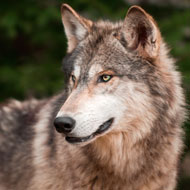
Wolf
Wolf populations in Finland have fallen 25 per cent in the past year.

Data shows fewer wolves than previously estimated 

Wolf populations in Finland have fallen 25 per cent in the past year, according to new figures.

Data published by the Natural Resources Institute Finland reveals there were an estimated 150-180 wolves at the beginning of March 2017. In March 2016, this figure was estimated to be between 200-300 individuals.

Members of the Wolf Action Group say this figure falls well below the 800 required to sustain a healthy degree of genetic diversity.

Under EU rules the wolf is classified as a highly endangered species. But in Finland, conservation groups say that efforts have failed.

In January, the government approved a hunt to kill 20 per cent of the country’s wolf stock in a bid to curb poaching and manage numbers. But conservationists claim that culling worsens the animals’ prospects by killing pack leaders, family groups and dispersing packs.

The Wolf Action Group state that the most important measure in wolf conservation is keeping existing wolf packs together. ‘Only in a coherent pack can wolves hunt their natural prey, such as elk and deer, they write.

Thanks to their protected status, wolf populations in Europe are now on the rise. According to the IUCN Red List, the number of wolves in Europe is likely to exceed 10,000.

But as wolf populations have risen, they have increased their range and moved into urban areas. This has led to calls for increased management of populations, including culls.



Become a member or log in to add this story to your CPD history

Equine Disease Surveillance report released for Q4 2025

News Story 1
 The latest Equine Disease Surveillance report has been released, with details on equine disease from Q4 of 2025.

The report, produced by Equine Infectious Disease Surveillance, includes advice on rule changes for equine influenza vaccination.

Statistics and maps detail recent outbreaks of equine herpes virus, equine influenza, equine strangles and equine grass sickness. A series of laboratory reports provides data on virology, bacteriology, parasitology and toxicosis.

This issue also features a case study of orthoflavivus-associated neurological disease in a horse in the UK. 

Click here for more...
News Shorts
Applications open for BEVA Back in the Saddle

The British Equine Veterinary Association (BEVA) has opened applications for its 'Back in the Saddle' coaching programme.

The online scheme offers structured group coaching for members wanting to reflect on their career path and regain clarity. Members may be returning to work after leave, uncertain about next steps or reassessing direction.

Attendees will benefit from impartial guidance and practical tools to support their professional development. Members are encouraged to take a 'proactive, future-focused approach' to their careers.

The sessions, taking place on Wednesdays from 7.30pm-9pm, are open to BEVA members with more than five years' experience. The first session takes place on Wednesday, 3 June 2026.

Applications will close on Wednesday, 27 May 2026.

