


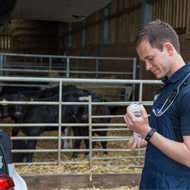
BVA looking at issues around hours worked and flexible working
With 75 per cent of large animal vets regularly working out-of-hours, a new working group has been set up to document the challenges of life in rural practice.
Established by the British Veterinary Association (BVA), the group has been a woking with vet Ashley Rubins, a partner of Moorgate Veterinary Practice in Dartmoor.
Ashley, who specialises in emergency medicine and surgery, is an active member of the Dartmoor Rescue Group. Earlier this year he was crowned winner of a competition run by the BVA to find the vet facing the toughest driving conditions.
Commenting on the ups and downs of working in a rural practice, Ashley said: “I love working in a rural area. It’s great to spend so much time outdoors and I really feel like a part of the local community. You get to know all of your individual clients very well, all of their specific needs and how best to communicate with them. I find that particularly rewarding.
“If I’m going out to lots of calls for the day I’ll always take my Labrador, Midge, in the back seat. She loves coming along with me and we take any opportunity to get out for a walk on the moors between calls.”
“It’s one of the big pleasures of the job, being able to get out on the moors. I’m very lucky to work right on the border of an amazing National Park. I’m often driving 45 minutes to an hour to reach a call out. Delays can be very dangerous. Without wanting to sound dramatic, it can be life or death if you’re delayed on your way to a difficult calving.”
BVA’s Voice of the Veterinary profession survey revealed that 75 per cent of large animal vets worked out-of-hours compared to 47 per cent of companion animal vets. It also revealed that nine in ten mixed practice (91 per cent) and equine vets (88 per cent) also worked out-of-hours.
“We know that vets who work in rural practices face challenges but they also gain tremendous rewards from working in rural practice and for many vets who chose this work it is because they love rural life and everything it has to offer,” commented BVA President Gudrun Ravetz.
“What we need to do is to ensure that all vets – wherever they work – have a good life/work balance. BVA’s Workforce Issues Working Group is looking at issues around hours worked and flexible working. While all vets know that out-of-hours is part of the job, we need to make sure that vets like Ashley have time to take part in other activities, such as volunteering for the Dartmoor Rescue Group, or simply enjoying the rugged terrain of somewhere as beautiful as the Dartmoor national park.”
Image (C) BVA


 Companies marketing medicines for small pets exempt from authorisation must submit their annual return to the Veterinary Medicines Directorate (VMD) by 30 November 2026.



