


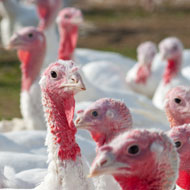
H5N8 strain confirmed in turkey flock
Avian flu H5N8 has been confirmed in a flock of around 6,000 turkeys at a farm in East Lindsey in Lincolnshire.
The case follows confirmation of the disease at a nearby turkey farm on 16 December 2016. Defra says there is unlikely to be a direct link to the previous case, but a full investigation is underway.
A number of turkeys have died and the remainder are being humanely culled. A 3km protection zone and a 10km surveillance zone have been put in place around the infected premises to limit the risk of the disease spreading.
Chief veterinary officer Nigel Gibbens said: “We have taken swift action to limit the risk of the disease spreading with restrictions in place around the affected premises. A full investigation is underway to determine the source of the infection.
“This finding reminds us that we must all be vigilant for signs of disease and take steps to minimise the risk of birds catching the disease from wild birds – either directly or through the environment.
“This means complying with the legal requirement currently in place to house birds or otherwise keep them separate from wild birds and following strict biosecurity measures to minimise the risk of avian flu spreading via the environment.”
The same strain has been found in backyard flocks in Carmarthenshire, Wales, and Settle, North Yorkshire, earlier this month. It was also found at another turkey farm in Lincolnshire in December, and in a number of wild birds in England, Scotland and Wales.


 Companies marketing medicines for small pets exempt from authorisation must submit their annual return to the Veterinary Medicines Directorate (VMD) by 30 November 2026.



