


Research review ‘supports call for neonicotinoid ban’
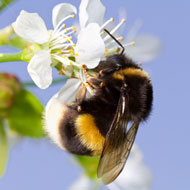
‘New research shows in particular that harm to bees arises not only from treated crop plants but also from contaminated wild plants that have not been treated with neonicotinoids.'
A new report suggests neonicotinoid pesticides pose similar or greater risks to bees than was perceived in 2013, when a partial ban of three neonicotinoids was introduced in the EU.
Greenpeace commissioned scientists at the University of Sussex to conduct a major review of research published since the ban.
The review confirmed risks identified by the European Food Safety Authority (EFSA) in 2013, and identified additional threats to pollinators. As a result, the research team and Greenpeace are calling for a moratorium on their use.
Recent research shows exposure to neonicotinoids from non-target plants represents a greater risk than previously thought. Studies demonstrate extensive uptake of the chemicals, and their presence in the pollen, nectar and foliage of wild plants. Bees collecting pollen from treated crops are expected to be exposed to the highest neonicotinoid concentrations, but non-trivial quantities are also found in pollen and nectar collected from wild plants.
Similarly, the sub-lethal effects on bees were considered limited in 2013 as there was no testing methodology to assess their effects. Research in the past three years suggests exposure to treated flowering crops has significant negative effects on free-flying wild bees. Some studies have also shown negative impacts on foraging ability and fitness.
The review also looked at the negative impacts of neonicotinoids on other organisms and the wider environment.
Commenting on the findings, Greenpeace said: ‘New research shows in particular that harm to bees arises not only from treated crop plants but also from contaminated wild plants that have not been treated with neonicotinoids.
‘Recent data also demonstrates that neonicotinoids have become ubiquitous in our environment, polluting water, soil and natural vegetation. The evidence indicates that they pose significant risks to many wildlife species other than bees, including butterflies, beetles and aquatic insects, with possible ripple effects up the food chain.’
In light of the findings, Greenpeace believes it would be ‘irresponsible’ to continue using the chemicals, and is calling for a complete ban of the three neonicotinoids that are already subject to partial bans - imidacloprid, clothianidin and thiamethoxam.
Authors from the University of Sussex said new research on these three neonicotinoids ‘strengthens arguments for the imposition of a moratorium on their use, in particular because it has become evident that they pose significant risks to many non-target organisms, not just bees.’
They added: ’Given the improvement in scientific knowledge of how neonicotinoids move into the wider environment from all crop types, a discussion on the risks posed by their use on non-flowering crops and in non-agricultural areas is urgently needed.’
A review currently being carried out by EFSA has been delayed until autumn this year owing to the large amount of data submitted.


 Companies marketing medicines for small pets exempt from authorisation must submit their annual return to the Veterinary Medicines Directorate (VMD) by 30 November 2026.



