


Cost, knowledge and facilities pinpointed as key restrictions
Plymouth researchers say veterinary surgeons and nurses could be seeing increasing numbers of wildlife casualties, while facing significant restrictions in terms of cost, knowledge and facilities.
A new study published in the Veterinary Record explored how much time veterinary professionals spend treating wild animals, and the role they feel they should play in doing so. Undergraduate student Emily Barnes and Dr Mark Farnworth, both of the University of Plymouth's School of Biological Sciences, carried out a small survey of 170 RCVS-registered veterinary practices.
Of these, 85 per cent had treated wildlife in the past year and 71 per cent felt that veterinary practices should have a role in wild animal welfare.
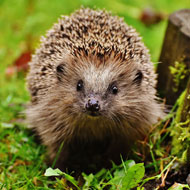
Garden birds and hedgehogs were the most commonly treated species (31.9 per cent and 23.9 per cent respectively). Animals injured by predators accounted for more than half of those brought to the practices (55.1 per cent), closely followed by animals injured in vehicle collisions (47.1 per cent).
The majority of respondents (84 per cent) said they were sometimes or often willing to treat animals beyond first aid/stabilisation before transferring the patient to a wildlife organisation.
Knowledge and skills were most frequently cited as restrictions in treating wildlife, alongside lack of facilities and equipment. Cost and time were another key factor, with 85.6 per cent of respondents saying the public expects veterinary practices to treat wildlife for free.
Each practice treated an average of 30 wild animals in the last year. Based on this study authors estimated that veterinary practices on the whole could be treating as many as 170,000 wild animal injuries a year - far higher than the 30,000-70,000 suggested by previous research.
'Based on the responses given, the majority of veterinary practices recognise and accept their responsibility to treat wildlife casualties, but face a larger caseload than previously estimated and identified knowledge, facilities, cost and time as significant restrictions,' the authors wrote.
'Additional financial support and dissemination of information on wildlife rehabilitation and outcomes within the veterinary community may be beneficial, but future research could assess how concerns identified affect practice capability, treatment offered and animal welfare.'


 Companies marketing medicines for small pets exempt from authorisation must submit their annual return to the Veterinary Medicines Directorate (VMD) by 30 November 2026.



