


Farming minister welcomes industry-led initiative
A new cattle health programme is promising to help farmers in England and Wales to avoid the effects of bovine TB.
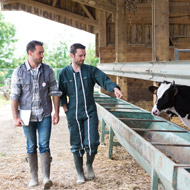
The CHeCS bTB Herd Accreditation is a voluntary scheme that has launched on a dairy farm at Iron Acton near Bristol. For every year a herd does not have a bTB breakdown, its 'score' is improved.
Herd vets and cattle owners will be required to work together to follow a number of biosecurity measures that have already been implemented in five other cattle disease control programmes.
Scores run from 0-10, as follows: 0 - following all CHeCS measures but has had a breakdown in the past 12 months; 1 - following all CHeCS measures and has been one year since the last herd breakdown; up to 10 - following all CHeCS measures and has been 10 years or more since last herd breakdown.
According to CHeCS (Cattle Health Certification Standards), the industry-led programme aims to reduce the risk of infection and benefit farmers who sell cattle from regions with a high risk of bTB, or those who wish to minimise exposure from bought-in animals.
Farming minister George Eustice and Welsh cabinet secretary Lesley Griffiths welcomed the scheme.
Mr Eustice commented: "Dealing with Bovine TB is costing us £100 million a year and causing devastation and distress for farmers and rural communities across the country. Thirty-three thousand cattle were slaughtered because of the disease last year alone and many farms are subject to movement restrictions which can affect their trade.
"But we know some 40 per cent of herds in the high-risk area in England have never had a breakdown, and the CHeCS scheme will help them to communicate this so they can carry out risk-based trading to support their businesses.
"The scheme will also recognise those practicing good biosecurity, which is a core part of our long-term plan to tackle bovine TB."
Andrew Cobner, president of the British Cattle Veterinary Association (BCVA), is a technical lead on the project. He praised CHeCS for "leading the way" on increasing biosecurity and risk-based trading.
"All too often we are confronted with the view that there is little or nothing that we can do to control TB," he explained. "We wouldn't accept this attitude with any other infectious disease so it's time farmers and vets fought back."
Farmers wishing to join the scheme are advised to speak to their vet, then contact one of the participating CHeCS-accredited health schemes listed on www.checs.co.uk.


 Companies marketing medicines for small pets exempt from authorisation must submit their annual return to the Veterinary Medicines Directorate (VMD) by 30 November 2026.



