


Welfare research projects receive AWF funding
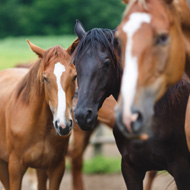
Recipients of the grants will be able to carry out high quality veterinary research into the disease and welfare of horses, cattle and sheep.
Six research projects on key aspects of livestock and equine welfare can now go ahead thanks to funding from the Animal Welfare Foundation (AWF).
Recipients of the grants will be able to carry out high quality veterinary research into the disease and welfare of horses, cattle and sheep. The projects will take place over one to three years, with funding levels depending on the length of the study.
AWF's Norman Hayward Trust has awarded more than £1 million to research projects in just over a decade.
Karin Mueller, who will study lameness in beef cattle, said: "We are excited to be able to explore an area about which virtually nothing is known. Our work will potentially benefit millions of beef cattle, give a boost to beef farmers, and underline how seriously welfare of food producing animals is taken in the UK."
Lesley Miller, an independent researcher who will focus on rams in commercial sheep flocks, added: "Sheep farmers have a saying that the ram is ‘half the flock’, yet our knowledge of the challenges to the health and welfare of rams on commercial sheep farms is sparse.
"The funding we have received from the Norman Hayward Fund will enable us to establish the main factors associated with losses, the costs involved and allow us to start looking for ways to improve the longevity and welfare of this vital group of animals."
The full list of 2016 recipients:
- Karin Mueller, Liverpool University: Lameness in beef cattle - establishing a knowledge base
- Lesley Stubbings, Independent: Improving the welfare and longevity of rams in commercial sheep flocks
- Dr Maria R Lopez-Alvarez, Animal Health Trust: Validation of equine cell lines as a cellular replacement to model equine primary cells for in-vitro studies
- Katherine Hughes, Cambridge University: Understanding the role of STAT1, STAT3 and STAT5 in naturally occurring inflammatory lesions of the bovine and ovine mammary gland
- Diana Williams, Liverpool University: The impact of liver fluke infection on the welfare of horses
- Laura Green, Warwick University: Development, testing and rollout of an online lameness recording system for sheep farmers
AWF chairman Chris Laurence said one of its main charitable aims is to raise the standards of practical animal welfare, which is why it supports research projects that could change the way we understand livestock and equine welfare.
He added: "This year’s recipients show a great range and depth in their research topics and we look forward to some interesting outcomes that will improve the day to day lives of the target species."


 Companies marketing medicines for small pets exempt from authorisation must submit their annual return to the Veterinary Medicines Directorate (VMD) by 30 November 2026.



