
Your data on MRCVSonline
The nature of the services provided by Vision Media means that we might obtain certain information about you.
Please read our Data Protection and Privacy Policy for details.

In addition, (with your consent) some parts of our website may store a 'cookie' in your browser for the purposes of
functionality or performance monitoring.
Click here to manage your settings.
If you would like to forward this story on to a friend, simply fill in the form below and click send.

Your friend's email:
Your email:
Your name:
 
 
Send Cancel

Asian hornet outbreak contained, Defra confirms
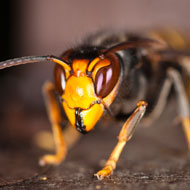
asian hornet
Asian hornets arrived in France in 2004 and are now common in large parts of Europe.

Nest identified and destroyed in Gloucestershire
 
An outbreak of Asian hornets in south west England has been contained after bee inspectors found and destroyed a nest in Gloucestershire.

The invasive hornet poses no greater risk to human health than a bee, but is a significant threat to honey bee colonies. The species was first spotted in Tetbury, Gloucestershire, in September this year.

A three-mile surveillance zone was imposed in Gloucestershire and Somerset and bee inspectors scoured the area, using infrared cameras and traps.

Defra confirmed in a statement that the nest was treated with pesticide and removed in early October. No further hornets have been seen since.

Two dead Asian hornets were found in separate locations in north Somerset, but no nests or live hornets were found by inspectors. Defra says there have been no further sightings.

Worker Asian hornets cannot survive in cold weather so they will die as winter set in. However, Defra will remain vigilant, working closely with the National Bee Unit and its nationwide network of bee inspectors, as well as other partners.

Asian hornets arrived in France in 2004 and are now common in large parts of Europe. It is possible the species could reappear in England next year and Defra is urging members of the public to report any suspected sightings.

For advice on what to do if you believe you have seen an Asian hornet, visit: http://www.nonnativespecies.org/alerts/index.cfm?id=4

Image by Danel Solabarrieta/CC BY-SA 2.0

 

Become a member or log in to add this story to your CPD history

Equine Disease Surveillance report released for Q4 2025

News Story 1
 The latest Equine Disease Surveillance report has been released, with details on equine disease from Q4 of 2025.

The report, produced by Equine Infectious Disease Surveillance, includes advice on rule changes for equine influenza vaccination.

Statistics and maps detail recent outbreaks of equine herpes virus, equine influenza, equine strangles and equine grass sickness. A series of laboratory reports provides data on virology, bacteriology, parasitology and toxicosis.

This issue also features a case study of orthoflavivus-associated neurological disease in a horse in the UK. 

Click here for more...
News Shorts
Applications open for BEVA Back in the Saddle

The British Equine Veterinary Association (BEVA) has opened applications for its 'Back in the Saddle' coaching programme.

The online scheme offers structured group coaching for members wanting to reflect on their career path and regain clarity. Members may be returning to work after leave, uncertain about next steps or reassessing direction.

Attendees will benefit from impartial guidance and practical tools to support their professional development. Members are encouraged to take a 'proactive, future-focused approach' to their careers.

The sessions, taking place on Wednesdays from 7.30pm-9pm, are open to BEVA members with more than five years' experience. The first session takes place on Wednesday, 3 June 2026.

Applications will close on Wednesday, 27 May 2026.

