


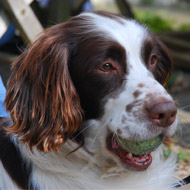
Roscoe has not missed a single day of work in his 11 years of service
A London Fire Brigade dog who has helped to sniff out hundreds of fires around the Capital is to receive the International Fund for Animal Welfare’s (IFAW) Animal of the Year award.
12-year-old Roscoe is just one of three dogs specially trained and highly skilled fire investigation dogs working for the London Fire Brigade.
The springer spaniel, nicknamed ‘the dog of truth,’ helps establish whether a fire has been started deliberately. Using his impressive sense of smell, Roscoe helps the team to quickly find the cause of the fire and improve conviction rate against arsonists.
Roscoe has not missed a single day of work in his 11 years of service and has assisted at over 600 fires. His handler, Mick Boyle, thought Roscoe would be ready for retirement by the age of 10, but he continues to display enthusiasm and energy for his work.
“Every single day Roscoe has never failed to amaze me,” said Mick. “He always surprises me and it gives me immense pleasure and satisfaction to see him enjoying the work while finding the cause of suspicious fires and helping safeguard the community. When members of the public see him arrive at the scene of a fire and ask why he’s there I say he’s going to tell me who started the fire.
“Roscoe and the other fire investigation dogs are one of London’s best kept secrets; the heroes with dirty faces. At the age of one year, Roscoe came to me to start training after being given up for rehoming by his previous owners. Immediately he hit the ground running and as a team Roscoe makes me look good!”
Roscoe, accompanied by Mick, will receive his award at IFAW’s prestigious Animal Action Awards event at the House of Lords on October 18.
Because of his reluctance to stop working, Mick is planning a gradual shift towards retirement for him later in the year to ensure he does not get bored.
He will live out his days in comfort with Mick and his other dogs, and for the foreseeable future will continue to assist with other duties he also excels at and enjoys; meeting the public at fire safety open days and events.
Image (C) International Fund for Animal Welfare


 Companies marketing medicines for small pets exempt from authorisation must submit their annual return to the Veterinary Medicines Directorate (VMD) by 30 November 2026.



