


New project unites beekeepers and farmers
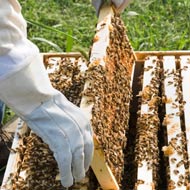
Around 70 crops are dependent on or benefit from bees, which is estimated to be worth £200 million a year.
A new nationwide scheme has launched to protect bees by making it easier for farmers to alert beekeepers when they intend to spray an insecticide.
'BeeConnected' is a new website that allows farmers to identify their fields and inform local beekeepers about spraying in advance. Alerts will also tell beekeepers which crop is being sprayed and the compound being applied.
Beekeepers can plot the location of their hives online in just a few clicks and will then be notified by email when a nearby farmer is planning a spraying event. This allows keepers to take precautionary action, such as moving their hives or shutting bees in for a short time.
The project is being led by Voluntary Initiative (VI), which worked closely with the National Farmers Union, British Beekeepers Association and Crop Protection Association. BeeConnected went live earlier this week following a successful pilot scheme in Herefordshire during the spring spraying season.
Bees are hugely important to UK agriculture. Around 70 crops are dependent on or benefit from bees, which is estimated to be worth £200 million a year.
Current best practice requires farmers to notify spray liaison officers (SLO) who act as a 'go between' among farmers and beekeepers. This traditional system has not always been straightforward. BeeConnected hopes to overcome these issues and reduce the risk to bees by improving communication.
Commenting on the scheme, farmer Andrew Watts, who took part in the pilot, said: "The countryside is a shared place, and beekeepers need farmers as much as farmers need beekeepers. It’s a two-way process, and anything that improves the communication there – as BeeConnected does – is a good thing."
Beekeeper Mat Smith, added: "The current SLO system isn’t always effective. The BeeConnected website is an excellent tool that can improve both bee health and relations between beekeepers and farmers.
"Honey bees are hugely beneficial to both their keepers, farmers and the larger population as a whole, and open communication between farmers and beekeepers can only be a good thing."


 Companies marketing medicines for small pets exempt from authorisation must submit their annual return to the Veterinary Medicines Directorate (VMD) by 30 November 2026.



