


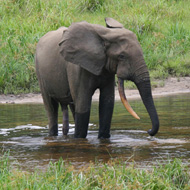
Slow intrinsic growth rate and illegal poaching threats
A study published in the Journal of Applied Ecology has uncovered the challenges to recovery faced by the declining African forest elephant population.
In the first of its kind, the 23-year study data on the Dzanga forest elephant population in the Central African Republic has enabled ecologists to quantify population trajectories.
A recent census citing a 62 per cent decline in numbers from 2002 to 2011 has corroborated the suspicion that forest elephants experience the greatest level of poaching in Africa.
However, the worryingly slow population growth rates are three times those reported for congeneric species, savanna elephants, indicating the significant repercussions of human-induced mortality on the dwindling population.
The study highlights the need to stem poaching and institute long-term protective measures. It states: 'The decline is of high conservation concern due to the evolutionary distinctiveness of forest elephants and their ecological importance to central African humid forests which serve as the second largest carbon sequestrian zone on the planet.'
Estimated at 10-18 per cent by modelling of Monitoring of the Illegal Killing of Elephants (MIKE), the species experiences the greatest level of poaching in Africa.
Previously uncollected detailed demographic information on the population growth rate, birth rate, mortality rate and inter-birth intervals of 1,207 elephants underlines debates at the Convention on International Trade in Endangered Species (CITES) on reassessing current policies based on underestimated population recovery times.
The full study can be read here: http://onlinelibrary.wiley.com/doi/10.1111/1365-2664.12764/full
Image by Peter H. Wrege - Own work, CC BY-SA 3.0, https://commons.wikimedia.org/w/index.php?curid=12291072


 Companies marketing medicines for small pets exempt from authorisation must submit their annual return to the Veterinary Medicines Directorate (VMD) by 30 November 2026.



