


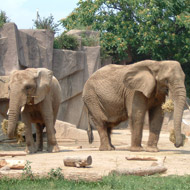
Controversial tool used to handle elephants
Two of the world's leading animal charities are calling for an urgent review of the use of bullhooks following reports that some UK zoos are still using the tool in elephant handling.
A bullhook, also known as an ankus, consists of a hook which is attached to a 60-90cm handle, ending in a tapered end.
While elephant handlers often refer to a bullhook as a 'guide', opponents maintain that it is used on sensitive parts of the elephant's body to inflict pain.
According to the Born Free Foundation and The David Sheldrick Wildlife Trust, several UK zoos still manage their elephants under 'free contact' systems that permit keepers and elephants to share the same space. This management system places keepers at risk and traditionally relies on the use of an ankus to control elephants, they write.
Virginia McKenna, co-founder of the Born free Foundation, said she was "appalled" to discover that some zoos handle their elephants in this way.
"These zoos are sending a dreadful and inaccurate message to their visitors: that elephants are ours to control," she said. "It is high time that zoos everywhere put the welfare of elephants first, and that we end the keeping of elephants in zoos entirely as soon as possible."
Dame Daphne Sheldrick, founder of the David Sheldrick Wildlife Trust, added: "I am shocked to learn that some UK zoos still use an ankus to enforce obedience through fear on the elephants in their custody, and this despite so much now known about the very human emotional makeup of these highly intelligent and by nature, gentle giants."
The charities are now calling for an urgent review of the Secretary of State's Standards of Modern Zoo Practice, which outline how UK zoos should keep animals. As an alternative to the ankus, they would like to see safety barriers recommended as standard practice across all zoos with elephants.
To find out more about their campaign, visit http://iworry.org/action/


 Companies marketing medicines for small pets exempt from authorisation must submit their annual return to the Veterinary Medicines Directorate (VMD) by 30 November 2026.



