
Your data on MRCVSonline
The nature of the services provided by Vision Media means that we might obtain certain information about you.
Please read our Data Protection and Privacy Policy for details.

In addition, (with your consent) some parts of our website may store a 'cookie' in your browser for the purposes of
functionality or performance monitoring.
Click here to manage your settings.
If you would like to forward this story on to a friend, simply fill in the form below and click send.

Your friend's email:
Your email:
Your name:
 
 
Send Cancel

Three cases of rare cattle fever confirmed
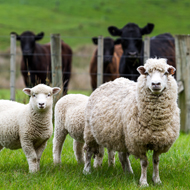
sheep and cows
Cattle can become infected when they are kept in close contact with sheep or lambs.
Cattle that co-graze with sheep are 'most at risk'
 
Three farms in the south-west have reported isolated cases of a rare cattle fever, malignant catarrhal fever (MCF). Farmers are being urged to watch their cattle closely if they are being co-grazed with sheep.

The affected cows were from two farms in west Dorset and one in east Devon, according to Farmers Weekly. The animals, which have now been euthanised, had shown a lack of appetite, painful red eyes and a very high temperatures. All three cows had followed sheep on their grazing rotation.

MCF is a sporadic disease, usually affecting only single animals in a herd. In the UK, it is caused by ovine herpesvirus-2, which affects sheep without causing clinical disease. Cattle can become infected when they are kept in close contact with sheep or lambs.

BVA's senior vice president, John Blackwell, told Farmers Weekly that three cases in one locality "would be unusual".

The recent flare ups were diagnosed by Synergy Animal Health. According to Synergy vet Alistair Moffet, those most at risk from MCF would be mixed farms or dairy farms that rent winter grazing to sheep.

Mr Blackwell said the cases reinforce the importance of being vigilant and watching cattle closely.

Become a member or log in to add this story to your CPD history

Defra shares new Sanitary and Phytosanitary guidance

News Story 1
 Defra has published guidance for the vet sector ahead of a proposed UK-EU Sanitary and Phytosanitary agreement.

The agreement, which will change the movement and trade of animals and related products, could see reductions in checks, paperwork and certification. As well as describing regulatory developments, the advice highlights the importance of animal ID, registration and traceability in disease control and other compliance arrangements.

The guidance can be found here. More detail is expected as negotiations progress. 

Click here for more...
News Shorts
Lords Committee opens Pet Parasite Medication inquiry

The House of Lords Environment and Climate Change Committee will launch its inquiry into Pet Parasite Medication (PPM) on Wednesday (3 June).

Focusing on treatments containing fipronil and imidacloprid, the inquiry will seek to understand distribution pathways and the impacts of PPM use and non-use on biodiversity and human health. It will also cover current regulation, monitoring, and the potential implications for pets and their owners.

The committee will hear evidence from environmental non-governmental organisations and research institutes. The public can follow the proceedings live on Parliament TV or in person in the Palace of Westminster.

