


UK dairy herd price falls by millions
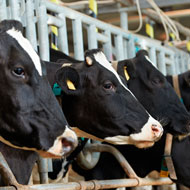
Producers are urged not to cut back on expensive feed.
Dairy farmers are being urged to keep their animals in good condition, as new figures show a staggering fall in the price of the UK dairy herd.
According to a report by Farmers Weekly, the value of the UK dairy herd - around 1.918 million cows - has dropped by almost £900m since 2014.
Auctioneers say the fall is due to less sales from small farms that are struggling to keep down costs, and large farms with poor milk deals and high labour costs.
Farmers considering a whole-herd or partial sales are now advised to think carefully about what suits their business best.
Tanya Colman from Kite Consulting said that farmers should critique what animals they send and make the most of returns.
Paperwork such such as pedigree classifications, milk recording and pregnancy information should be up to date and any guarantees, such as cell count, should be met, she said.
She added that producers should also make sure the animals are in good condition. They should not necessarily cut back on expensive feed or switch diets prior to the sale.
Auctioneers predict that numbers will increase in the months to come at regular markets and dispersal sales. But Andrew Clements, from Greenslade Taylor Hunt in Somerset, told Farmers Weekly that he had not seen a big rise so far.
“In the short term we have a few small dispersals planned with a few more pencilled in, but the west Country is still short of dispersal sales and the demand for quality is still there,” he said.
“With no signs of the milk price increasing and the continuation an oversupply if milk being produced, we think it’s inevitable that more dispersals will take place for those on [lower price] contracts.”
Auctioneer Gwilym Richards, who operates from Monmouthshire and Gloucestershire, added:
“If availability of secondary finance (leasing/hire-purchase for cows) became more restricted, more herds would be sold,” he said. “And, as herds become clear of TB, more would sell up.”


 Companies marketing medicines for small pets exempt from authorisation must submit their annual return to the Veterinary Medicines Directorate (VMD) by 30 November 2026.



