


Further work needed to understand triggers
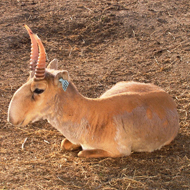
Scientists have shed new light on the catastrophic deaths of around 200,000 Saiga antelopes in May last year. Several labs have identified the bacterium Pasteurella multocida as the causative agent of haemorraghic septicaemia, which led to the animals' deaths.
During the extraordinary die-off last year, Saiga antelopes from the Betpak-Dala population in Kazakhstan, gathered for calving in a number of separate groups across a vast landscape. Soon after, a mass die-off began and, in just one month, 90 per cent of the population was lost.
"When symptoms appeared, death was only a few hours away," said Steffen Zuther from the Association for the Conservation of Biodiversity of Kazakhstan, who was in the field at the time. "The herds showed up to 100 per cent mortality, leaving only a few groups of animals alive, consisting mostly of males, which separate from the big calving aggregations."
Scientists say this is a unique and unprecedented biological event. Haemorraghic septicaemia caused by Pasteurella bacterium has been known to cause mortality in wild and domestic animals in grassland ecosystems, but the level of mortality seen has never been close to 100 per cent, as seen in the Saiga die-off.
Now, intensive work is underway to understand the triggers and co-factors behind this catastrophic event. An international team led by the Royal Veterinary College will focus on the impact of weather, soil and nutrient conditions, vegetation, the effect of flooding on soil minerals and bacterial levels on pasture.
Meanwhile, protecting the remaining population of Saiga is critical. The species needs time to recover from the die-off but it faces added pressure from poachers. Saiga horn is highly priced in traditional Chinese medicine.
The government of Kazakhstan has developed a list of conservation actions, which will be partially implemented this year.
Image: Vladimir Yu. Arkhipov, Arkhivov/Wikipedia/CC BY-SA 3.0


 Companies marketing medicines for small pets exempt from authorisation must submit their annual return to the Veterinary Medicines Directorate (VMD) by 30 November 2026.



