


Funding to develop new vaccines for Bovine TB
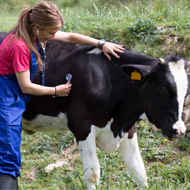
Bovine TB is one of the biggest challenges facing the cattle farming industry today.
Over £700,000 of funding has been awarded to the Roslin Institute to help develop new effective vaccines against bovine TB (bTB).
Led by professor Ivan Morrison, the project will examine a population of non-conventional bovine T-cells (NKp46+CD3+) as a novel target for vaccines against the disease.
The project forms part of a research programme subsidised by the Biotechnology and Biological Sciences Research Council (BBSRC), the National Researchers Replacement, Refinement & Reduction of Animals in Research (NC3Rs), and Defra to further understand the disease and the interactions between bTB and its host.
BBSRC chief executive professor Jackie Hunter, commented: “The basic bioscience funded through this integrated research programme will play a crucial role in the development of next generation control and eradication strategies for bovine TB.
“Increasing the production of herd to this disease is a top priority for UK food security, allowing greater food production from the same amount of land and reducing wastage in the food chain whilst reducing the cost UK taxpayers.”
Bovine TB is one of the biggest challenges facing the cattle farming industry today - particularly in the West and South West of England.
Current ‘test-and-slaughter’ policy has failed to constrain the spread of the disease. Researchers say that further understanding of the basic bioscience underpinning the disease will lead to a "step-change" in its treatment and eradication.
The newly awarded funding will help professor Morrison shed further light on the mycobacterial lipids that lead to NKp46+CD3+ T-cell responses in vivo and determine whether these responses could guide the development of new vaccines.


 Companies marketing medicines for small pets exempt from authorisation must submit their annual return to the Veterinary Medicines Directorate (VMD) by 30 November 2026.



