


NOAH highlights flaws in O'Neill report
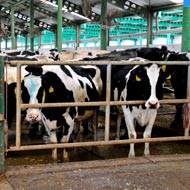
NOAH say that the report fails to acknowledge the fact that livestock weighs more than people.
The National Office of Animal Health (NOAH) have responded to Lord O'Neill's report on Antimicrobials in Agriculture stating that it contains "numerous flaws".
Published earlier this month, the government commissioned report recommends that the best way to reduce overall antibiotic use is to establish targets for antibiotic use in agriculture to an agreed limit for each country.
Commenting on the recommendation, NOAH chief executive Dawn Howard, said: “Rather than the global target to reduce use suggested, we believe the full commitment of all countries to implementing the global WHO Antimicrobial Resistance Action Plan would be more effective in actually addressing the resistance issue.
"There are a number of reasons, set out in our critique document, why we believe an arbitrary global reduction target is dangerously counterproductive. Different circumstances within different countries mean that one size very definitely does not fit all - as local disease, animal husbandry, economic and climate conditions will impact on countries abilities to change existing practices”.
NOAH's critique also addresses failures of the Report in relation to expression of data on antibiotic use in animals.
Mrs Howard continued: "When comparing human and veterinary use of antibiotics, it failed to acknowledge the vastly different population sizes as well as the fact that livestock such as cattle and pigs weigh more than people and thus will require a larger volume of antibiotic to treat an infection than a person will.
"Data from the UK shows that when adjusted for population and weight, human use of antibiotics is more than double that of animals."
“We believe data collection of use patterns can help to identify and support best practices. Our sector has taken a leading role at UK, European and global levels to ensure our products are used judiciously and responsibly."
She added: "We also believe that there needs to be enhanced surveillance of resistance prevalence to obtain better insights into the potential relationships between use, management practices, etc., and resistance.”


 Companies marketing medicines for small pets exempt from authorisation must submit their annual return to the Veterinary Medicines Directorate (VMD) by 30 November 2026.



