


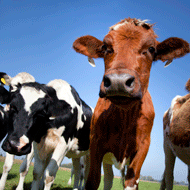
Teat condition found in heifers across the UK
A disease which causes cattle to excessively lick and remove their own teats due to intense irritation is on the rise, according to a report by the Farmers Guardian.
Vets and farmers are being advised to look out for the condition, known as ischaemic teat necrosis (ITN), which can lead to 80 per cent of affected animals being culled.
The article states that there has been an increase in incidences of the condition, with reports suggesting that it is more prevalent in heifers and in early lactation.
Vet Roger Blowey, who first recorded the disease in 2004, told the Farmers Guardian that the condition appears to start as a small, dry scab on the inside of a teat at the point where it joins the udder, and then spreads downwards.
He adds: “There is now evidence there is an occlusion [blocking] of blood vessels within the skin of the teat. My own theory is this creates a ‘pins and needles’ effect, leading to intense irritation so the animal licks and chews the teat to the extent the teat may be removed.”
Roger has been collecting data from vets and farmers across the country to gain a greater understanding of the disease. His survey of around 50 farms suggests that the condition may be more common than previously thought.
Results show that around 50 per cent of farms had witnessed at least one case of ITN in the last three years. Some farms had about 10-20 per cent of heifers affected in a year, with 80 per cent of animals needing culling in some situations.
Roger says: “In one Devon herd, with 20 per cent of heifers affected, 20 per cent of them needed to be culled. It is a very expensive condition and a significant factor for the industry.”
At present there is no treatment for the disease, but some farmers have had success by treating cases early - removing the dry scab and applying topical antiseptic or antibiotic.
Roger adds: “It is not confirmed picking up cases early helps, but it could. If you catch it when you see the first scab on the udder, scrape away the scab and apply antiseptic or antibiotic, then some herdsmen reported success. As soon as the teat becomes irritant, there appears to be no return.”
Roger is keen to collect more information on the disease and is asking vets and farmers to report cases to him.
If you have witnessed ischaemic teat necrosis in a herd, email: rogerblowey@mailbox.co.uk


 Companies marketing medicines for small pets exempt from authorisation must submit their annual return to the Veterinary Medicines Directorate (VMD) by 30 November 2026.



