


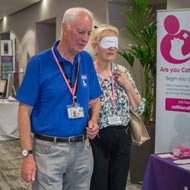
Guide dog owner explains how practices can help
At the first ever congress dedicated to veterinary receptionists, delegates heard an inspirational and useful talk from guide dog owner Judy Taylor, who explained how to provide a positive customer experience for blind and partially sighted clients.
Judy has had guide dogs for nearly 60 years, having lost her sight due to measles at 13 months old. Now aged 80, she is working with her seventh dog, a golden retriever called Elsa.
Speaking at the Cx Congress in Derby last weekend (20 June), Judy had delegates laughing one minute and crying the next with her inspiring and poignant story.
At the age of 16 she knew she wanted to become a teacher in a state school, not a special school for blind children, but at that time, no blind person had done this before. Undeterred, Judy was eventually accepted onto a teacher training course two years later, which meant moving to London and getting around by herself.
After her first year she applied for a guide dog, but due to the long waiting lists at the time, it was more than two years before she got her dog, shortly after she began teaching at a small school in Rugby, Warwickshire.
Moving most of the audience to tears, Judy described what having a guide dog has meant to her: "I think that dogs are not only the best guides that a blind person can have, but a dog - whether it's a trained dog or not - is the very, very best friend in the whole world that a human being can have.
"I owe so very, very much for the almost 60 years that Guide Dogs has given me the wonderful gift of independence."
In order to help understand what it's like to be blind or partially sighted, a number of delegates volunteered to put on eye masks and be led into the conference room by Guide Dogs' staff. All delegates were then asked to wear eye masks for as long as possible during Judy's talk.
While she said she has had only positive experiences with veterinary practices, she gave examples of a number of small steps staff can take to make it easier for blind or partially sighted clients.
These included:
- Never leave a blind or partially sighted person standing in the middle of the surgery or consultation room, as it is easy to lose balance - ensure they are near a table top, wall or chair back, for example.
- Never assume somebody needs help - different people have different capabilities. Only 2 per cent of people registered blind in the UK have no sight at all.
- Some people will accept help graciously whether they need it or not, while others may refuse it as they are determined to be independent. Don't let this put you off or hurt you.
- Explain what is going on in the room, for example if there is somebody else in the room so the person is not shocked when they hear a new voice. Lightly touch the person's shoulder or arm and use their name so they know you're speaking to them.
- Guide dogs are always on the person's left, so when you ask if they would like to take you arm to guide them, always offer your left arm.
- When guiding someone to a chair, put their hand on the back of it to help them guide themselves into it.


 Companies marketing medicines for small pets exempt from authorisation must submit their annual return to the Veterinary Medicines Directorate (VMD) by 30 November 2026.



