


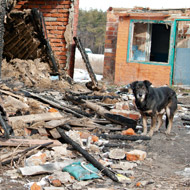
Advocated need for a holistic approach to disaster management
"Civil protection mechanisms should consider human-animal-ecosystem interactions in order to enhance preparedness and ensure successful response and quick recovery."
That was the take-home message of the natural disasters and "One-Health" conference held in Brussels last month.
Organised by the Federation of Veterinarians of Europe (FVE), around 90 medical and veterinary professionals gathered to discuss the link between humans, animals and the environment and advocated the need for a holistic approach to disaster management.
The FVE say that a holistic approach would allow for more efficient reaction, coordination and control during crises.
The conference concluded that an animal in a disaster can be a victim, a danger, a source of food, a rescuer or a sentinel.
"The care of animal health and welfare has been identified as a significant response capacity gap," say the FVE.
It was also acknowledged that during a disaster the majority of animal keepers want to save their animals and take a risk in order to do so.
"Pet-owners would put themselves or others in danger in order to save their pets, while farmers try to save their animals even though they know that when the crisis is finished it will be very difficult to recover," say the FVE. "Therefore, animals must be saved together with their owners, in order to avoid increasing the risks during the crisis period and also help the local community to recover quickly afterwards."
The conference also concluded that the veterinary surgeon's role in disaster management is 'crucial' and includes the safeguarding of animal health and welfare, as well as the protection of human and environmental health.
To read all of the conclusions from the conference visit the FVE website.


 Companies marketing medicines for small pets exempt from authorisation must submit their annual return to the Veterinary Medicines Directorate (VMD) by 30 November 2026.



