


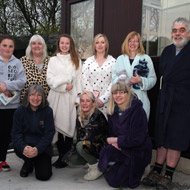
New pens good enough for humans to sleep in
Volunteers at Yorkshire Cat Rescue gathered last week to celebrate the refurbishment of its rehoming centre - but not in the way you might expect!
Instead of popping champagne and slicing cake, 12 volunteers donned their pyjamas, slippers and dressing gowns and bedded down in the centre for a sound nights sleep.
Thanks to grants from Support Adoption For Pets, The Jean Sainsbury Animal Welfare Trust and The Jeanne Marchig Animal Welfare Trust, Yorkshire Cat Rescue has been able to replace seven old wooden pens with ten warmer, brighter and more hygienic ones.
Centre manager, Sam Davies, explains: "The grants and donations which have paid for this re-build will dramatically improve the conditions for the cats living here; they are cleaner, warmer and offer a less intimidating space for the cats which helps enormously in making sure they show their friendliest side to potential adopters.
"We have been able to make better use of the old space and the three additional pens will allow us to rescue 150 more cats each year. These modern pens are so good that we thought we'd prove the point by camping out in them ourselves."
The project forms part of a larger venture to refurbish the centre's facilities, some of which date back to the early '90s when the centre first opened.
The kitten house has had a makeover, with nine new units that are both warmer and easy to keep clean. The accommodation also offers its residents a much less stressful space to rest whilst they await their new home.
"The new pens are amazing and perfectly acceptable even for humans to sleep in," says assistant centre manager, Jo Chafer. "The night turned out to be a great fun; we spent most of it cuddling the cats and sharing kitten stories although most of us did finally manage a bit of shut-eye.
"I guess we wanted to show that even though life at the rescue centre isn't ideal, we do our very best to make the cats here feel at home until they find a new, loving one."
Yorkshire Cat Rescue can now accommodate as many as 70 kittens and cats at the centre, with capacity for a further 200 in off-site foster homes.
Image (C) Yorkshire Cat Rescue


 Companies marketing medicines for small pets exempt from authorisation must submit their annual return to the Veterinary Medicines Directorate (VMD) by 30 November 2026.



