


Anglo-Saxon eye remedy kills MRSA
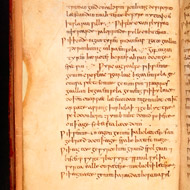
Scientists recreated a 10th century potion for eye infections from Bald's Leechbook, an old medical textbook.
An Anglo-Saxon remedy for eye infections could be the answer to killing the antibiotic superbug MRSA, according to research led by the University of Nottingham.
Scientists recreated a 10th century potion for eye infections from Bald's Leechbook, an old medical textbook in the British Library, to see if it really works as a remedy.
They were astonished to find that the 'potion', made of garlic, onion and parts of a cow's stomach, has remarkable effects on Methicillen-resistant Staphylococcus aureus (MRSA).
The team now has data showing that Bald's eye treatment kills up to 90 per cent of MRSA bacteria in 'in vivo' wound biopsies from mouse models.
Anglo-Saxon expert Dr Christina Lee from the University of Nottingham translated the recipe for the eye salve, which contained garlic, onion, wine and oxgall (bile from a cow's stomach).
Experts from the University's microbiology team then duplicated the remedy and tested it on MRSA cultures both in synthetic wounds and in infected wounds in mice.
Commenting on the study, Dr Lee said: “We were genuinely astonished at the results of our experiments in the lab. We believe modern research into disease can benefit from past responses and knowledge, which is largely contained in non-scientific writings. But the potential of these texts to contribute to addressing the challenges cannot be understood without the combined expertise of both the arts and science."
Microbiologist, Dr Freya Harrison added: “We thought that Bald’s eye salve might show a small amount of antibiotic activity, because each of the ingredients has been shown by other researchers to have some effect on bacteria in the lab – copper and bile salts can kill bacteria, and the garlic family of plants make chemicals that interfere with the bacteria’s ability to damage infected tissues.
"But we were absolutely blown away by just how effective the combination of ingredients was. We tested it in difficult conditions too; we let our artificial ‘infections’ grow into dense, mature populations called ‘biofilms’, where the individual cells bunch together and make a sticky coating that makes it hard for antibiotics to reach them. But unlike many modern antibiotics, Bald’s eye salve has the power to breach these defences.”
The team are due to present their findings at the Annual Conference for the Society for General Microbiology.


 Companies marketing medicines for small pets exempt from authorisation must submit their annual return to the Veterinary Medicines Directorate (VMD) by 30 November 2026.



