


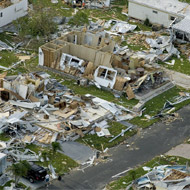
Natural disasters severely challenge the health and welfare of people and animals
The Federation of Veterinarians of Europe (FVE) is calling for the medical and veterinary professions to work together in dealing with the aftermath of natural disasters.
A conference emphasising the need for a holistic approach to disaster management by taking into consideration the human- animal-ecosystem interfaces, is due to be held in April.
The FVE say that this will allow for more efficient reaction, coordination and control during crises.
Natural disasters, such as earthquakes, floods or extreme climate conditions, severely challenge the health and welfare of people, animals and the ecosystem.
The FVE say that the health of people is compromised not only by the cause of the disaster, but also by the level of health and welfare of the affected animals; carcasses in the countryside would be a cause of infection; spread of diseases; contamination of water, food and feed; people reluctant to leave their farms or their pets behind may impede the work of rescue teams.
"These are amongst the most challenging situations the veterinary profession can confront" say the FVE. "Veterinarians are key players and must be well prepared to deal with the consequences of a disaster in order to achieve rapid and cost-efficient control. To do this, they must have a well-developed plan and the capacity to implement it."
The conference, which takes place at the International Auditorium in Brussels, Belgium, aims to bring together people from all over Europe active in both the humanitarian and veterinary field.
"The ultimate goal is to ensure that we are appropriately prepared to deal with natural disasters whenever they occur," they add.
For more information about the conference and to register, visit http://onehealth.eventzilla.net/web/event?eventid=2139076361 .
Image(C) Wikilimage


 Companies marketing medicines for small pets exempt from authorisation must submit their annual return to the Veterinary Medicines Directorate (VMD) by 30 November 2026.



